Review of nanoblock Charizard DX NBPM_080

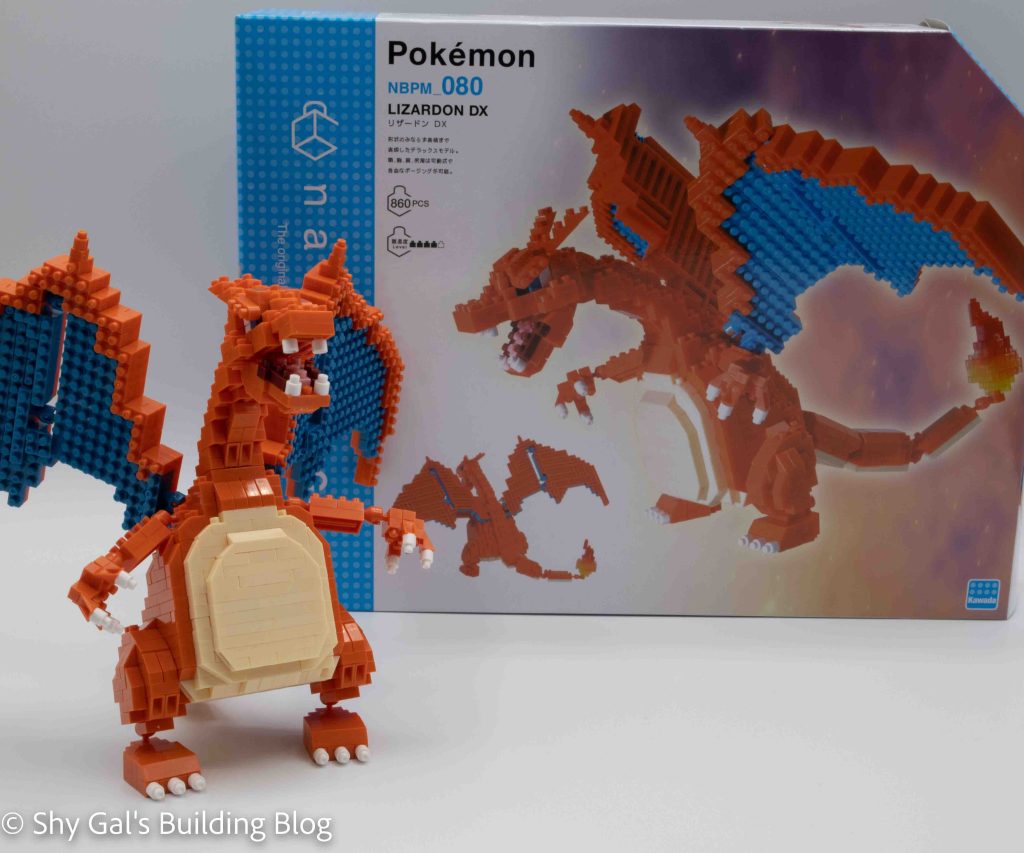
Charizard DX box and build

This post is a review of the nanoblock Charizard DX build. Charizard DX is part of the nanoblock Pokemon collection. Wondering what else is part of the Pokemon Collection? Click Here for a list.

Names:

  • English: Charizard DX
  • Japanese: Lizardon DX

Number: NBPM_080 

Number of Pieces: 860

Difficulty Rating: 4/5
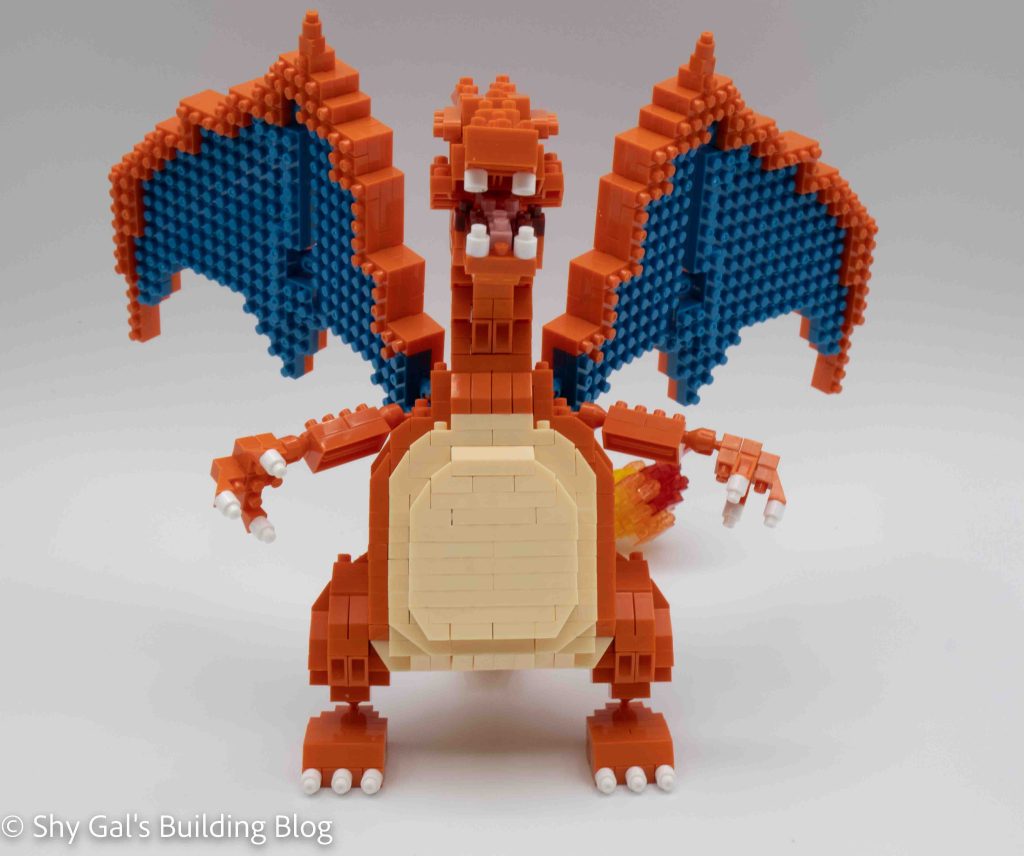
Charizard DX front view

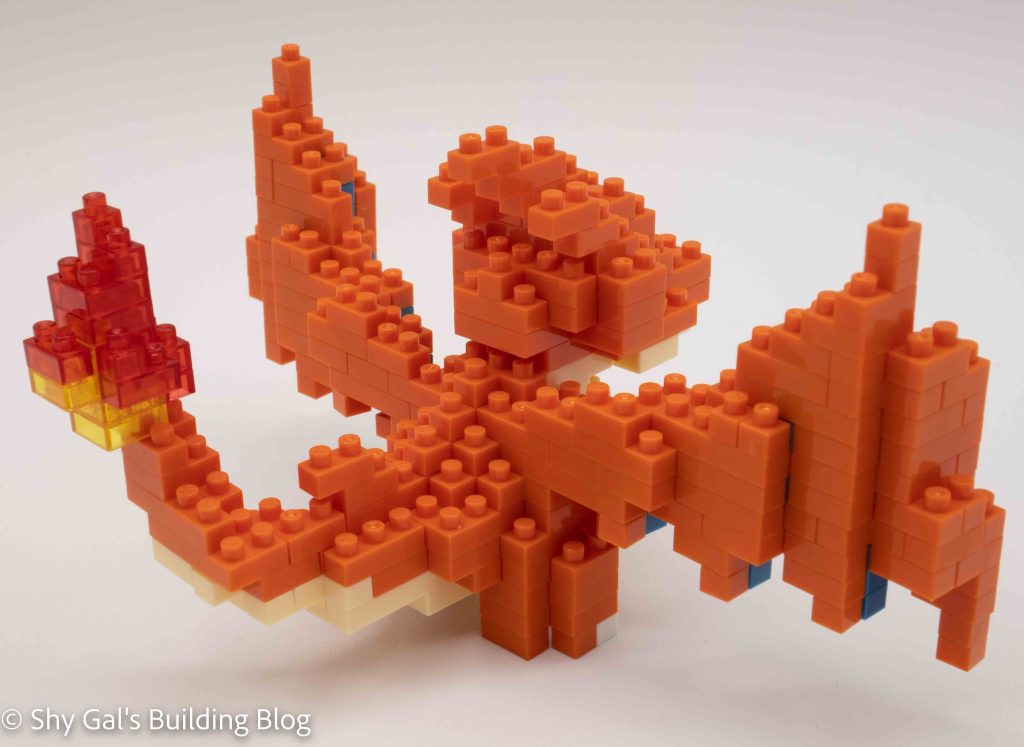
This is the deluxe build for Charizard. It has a lot more detail than the original Charizard build. It is a much larger build made in pieces and held together with ball joints. I did the build over a few days, so I recommend having a safe place to leave the build spread out while you are working on it.
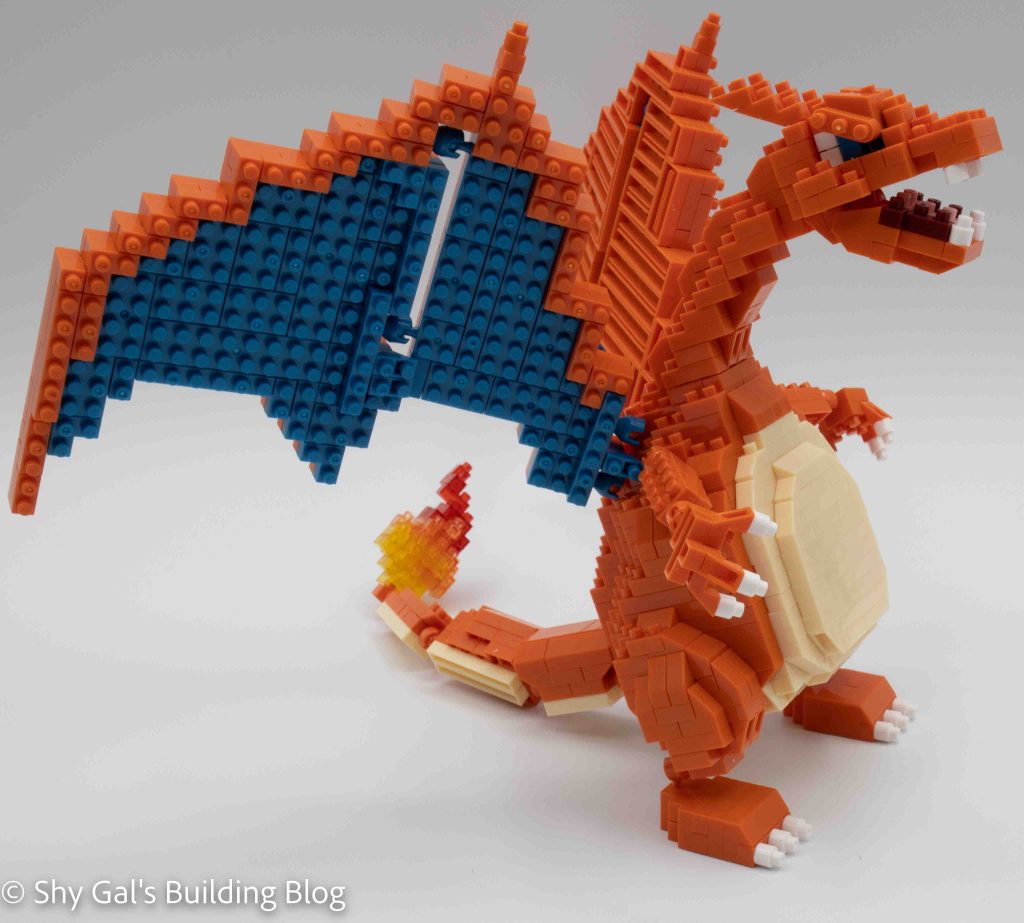
Charizard DX front 3/4 view

The nanoblock build begins by creating a base for the body. It takes about 6 steps to make the entire base of cream and orange bricks. You then continue the body by building up rings that get smaller until it closes the body. This build includes slanted pieces that I find stab my fingers when I push them into place.

The next step is to add the feet and arms via ball joints. The feet are built by stacking bricks to create a base to stand on. You attach the feet to a ball joint attached to the body. I had a hard time getting the ball joints lined up to stabilize the feet. You also build arms through a chain of ball joins. The hands are pretty fragile.
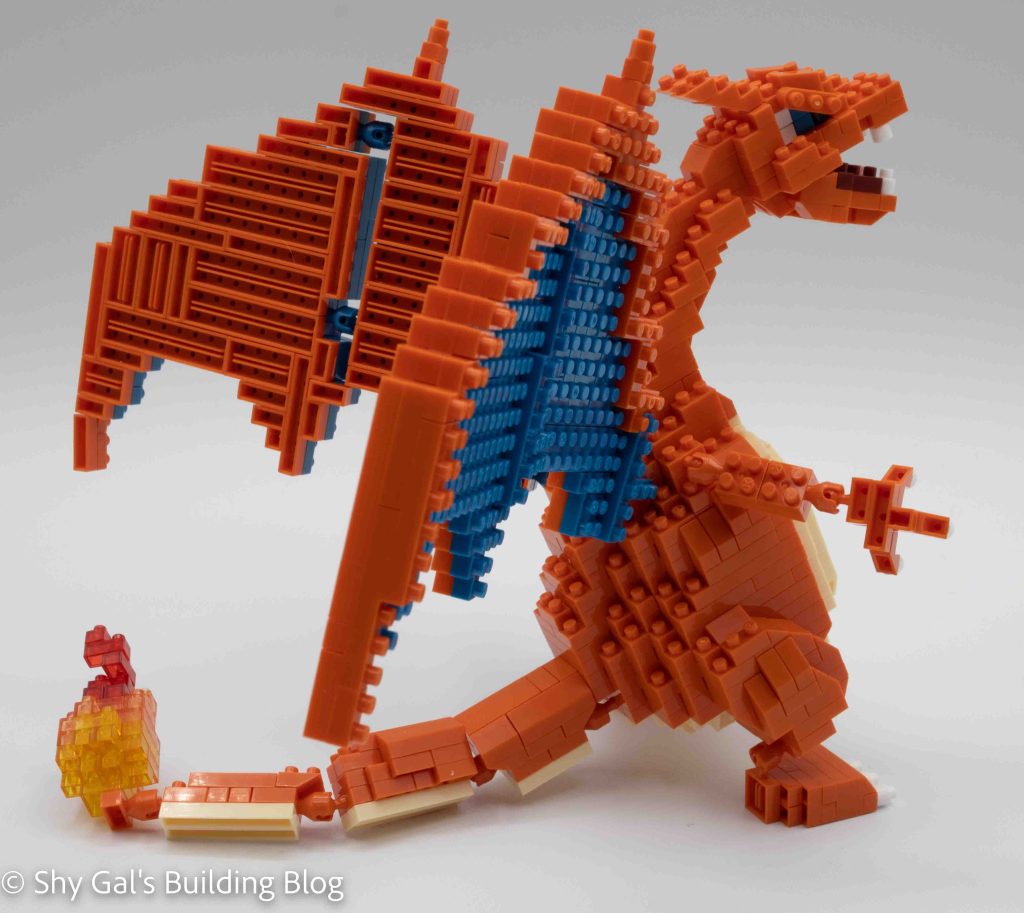
Charizard DX back 3/4 view

Now it is time to build the main section of the head. It is tricky because the head is generally only 3 bricks thick, so there isn’t much overlap, so it’s easy to push the bricks apart. The head is generally just building chunks of bricks onto other chunks until you have a completed head. When I attached the neck, I realized that I had attached the lower jaw in the wrong place, and the whole head fell apart when I moved it.

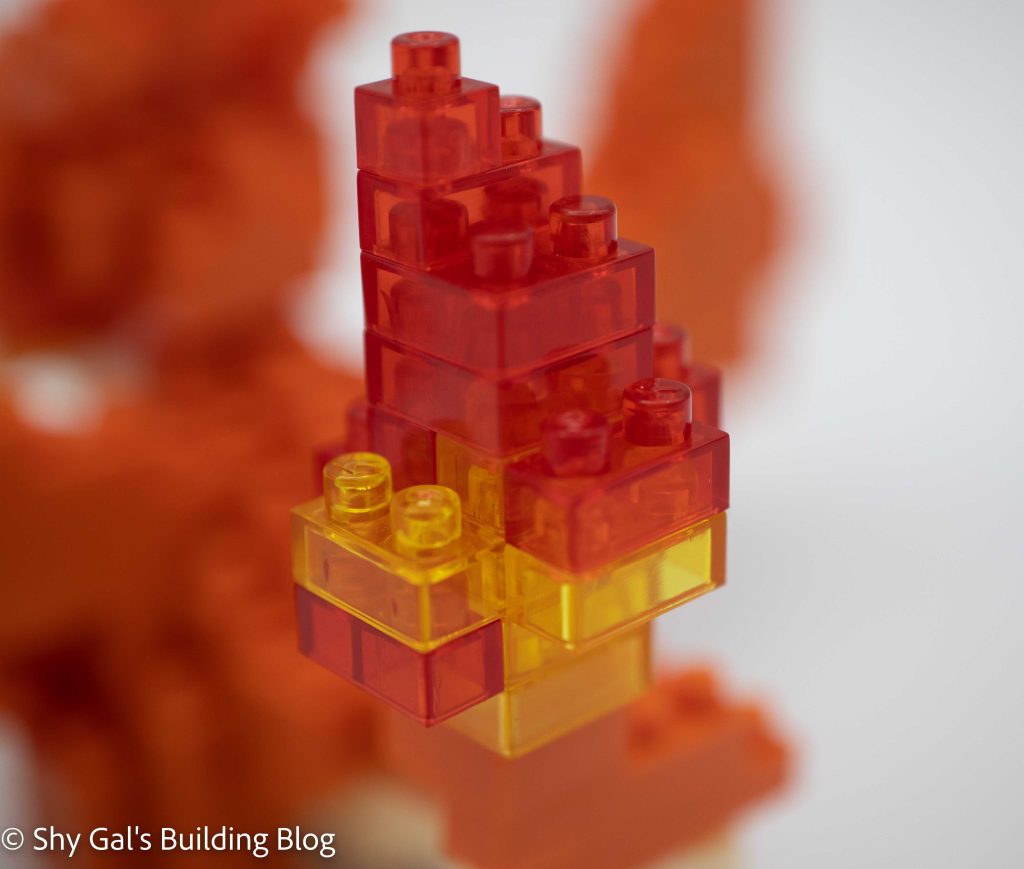
The following stages are to add the neck and tail. Both are very straightforward builds. The neck is a solid build that you eventually attach the head onto. The tail is a chain of bricks held together by ball joints. The tail includes the clear flame, which is a stack of clear bricks. As a warning, the tail likes to fall off the 1×2 brick that holds the flame.
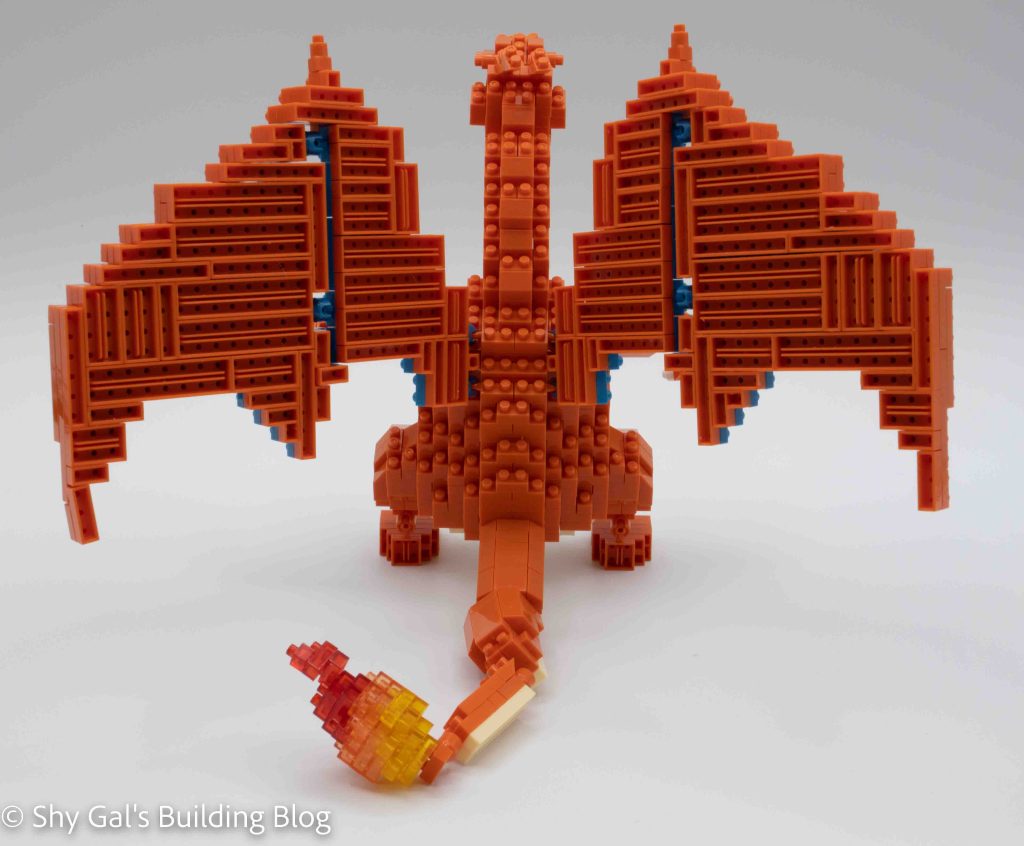
Charizard DX back view

The final stage of the build is to build the mirrored wings. These are large pieces that are 2-3 layers thick. They are built by creating smaller pieces that connect to the base. The directions are very straightforward and easy to follow. Once you make the wings, you attach them to the body, completing your build.

Overall I’m not sure how I feel about the build. This is the second deluxe Pokemon I’ve done, the other being Pikachu, and the detail is excellent. This is the 4th Charizard type build that nanoblock has made, and while it has the most detail, I would have rather had a different Pokemon. I found the final build to be very fragile and had difficulty posing it to get the photos because the flame kept falling off.
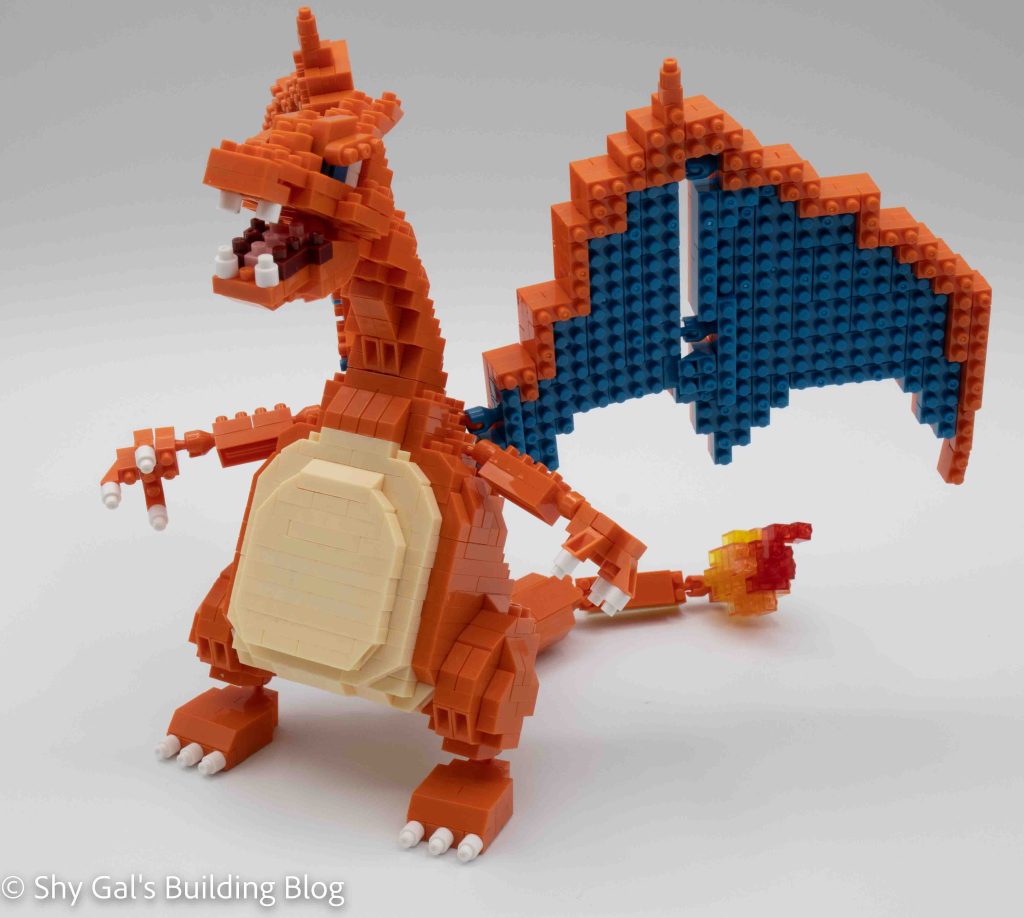
Charizard DX front angled view

Things I liked:

  • The amount of detail in the build

Things I didn’t like:

  • The head isn’t layered super stable and tended to fall apart
Review of nanoblock Piplup NBPM_079

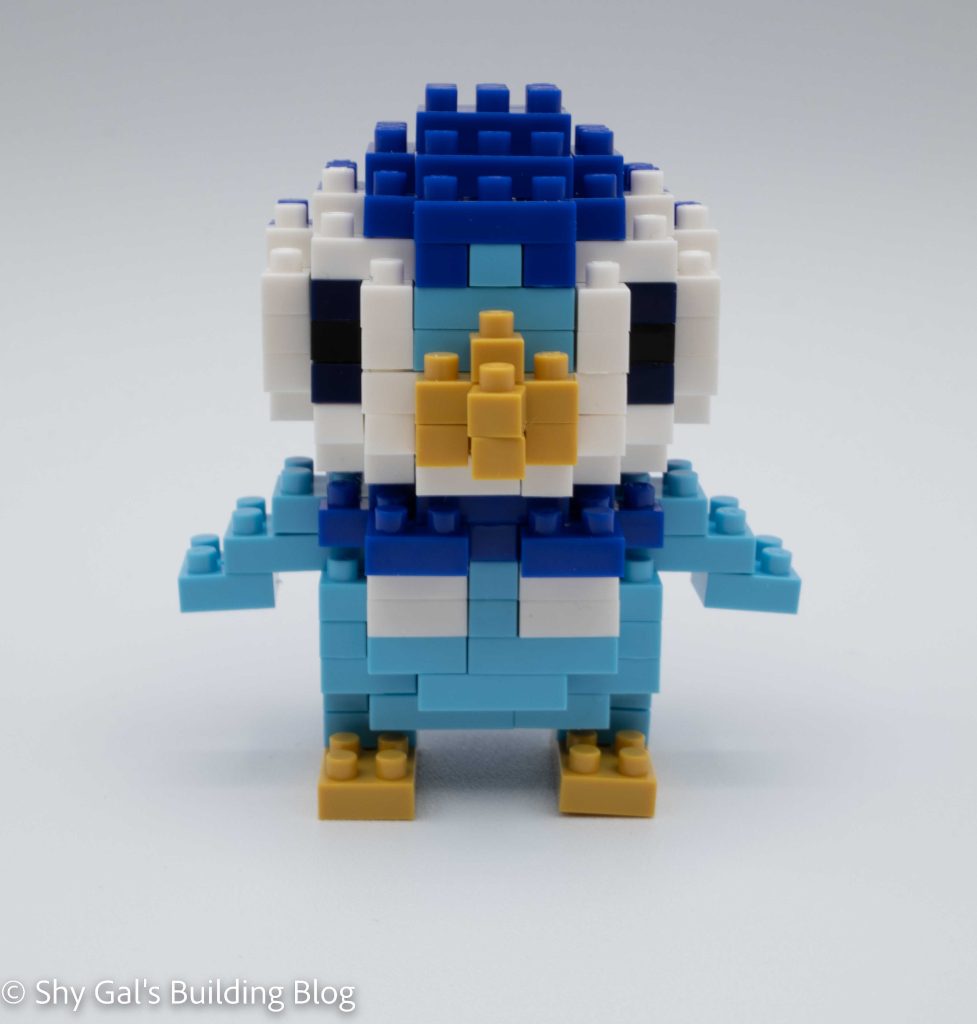
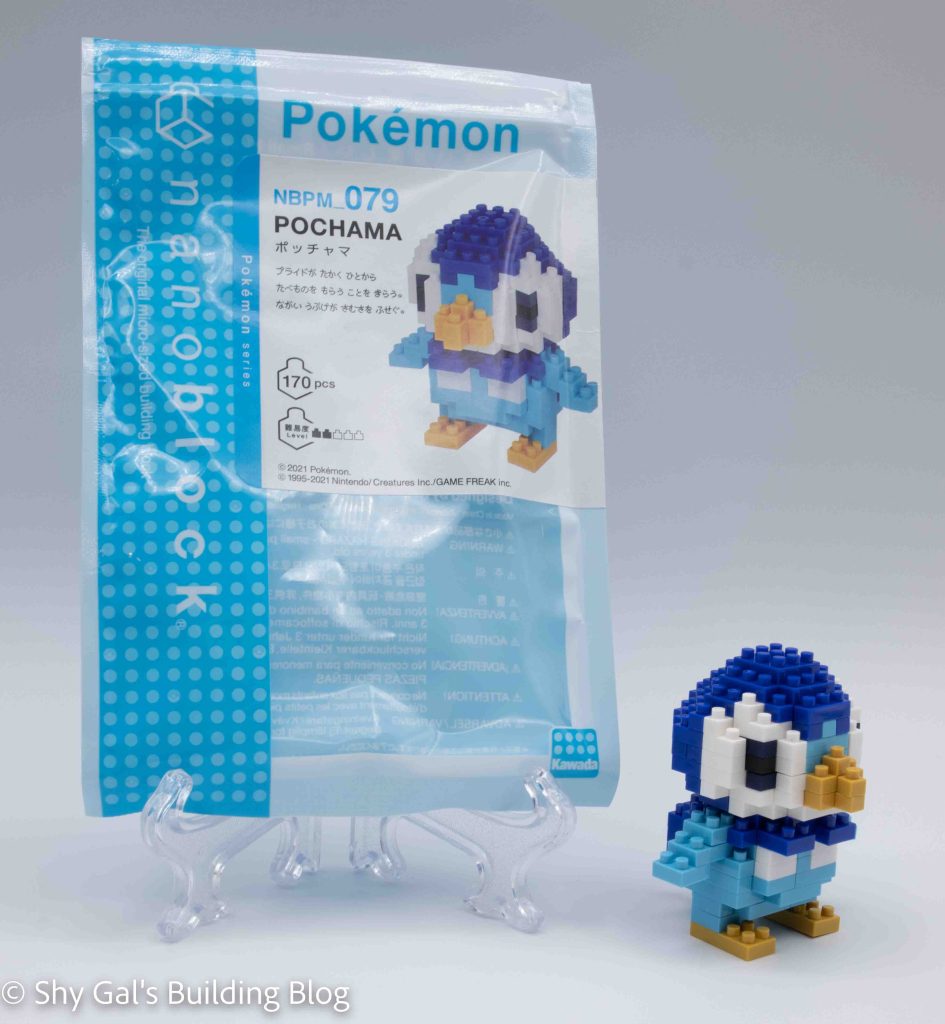
Piplup package and build

This post is a review of the nanoblock Piplup build. Piplup is part of the nanoblock Pokemon collection. Wondering what else is part of the Pokemon Collection? Click here for a list.

Names:

  • English: Piplup
  • Japanese: Pochama

Number: NBPM_079 

Number of Pieces: 170

Difficulty Rating: 2/5

Piplup front view

The nanoblock build for Piplup has 2 parts. There is the head and the body.

The section you build is the body. It begins with a layer of bricks in various shades of blue. The body is then built up using layers of blue bricks. In building layers, you add the white for the spots on Piplup’s chest. You also add Piplup’s wings.

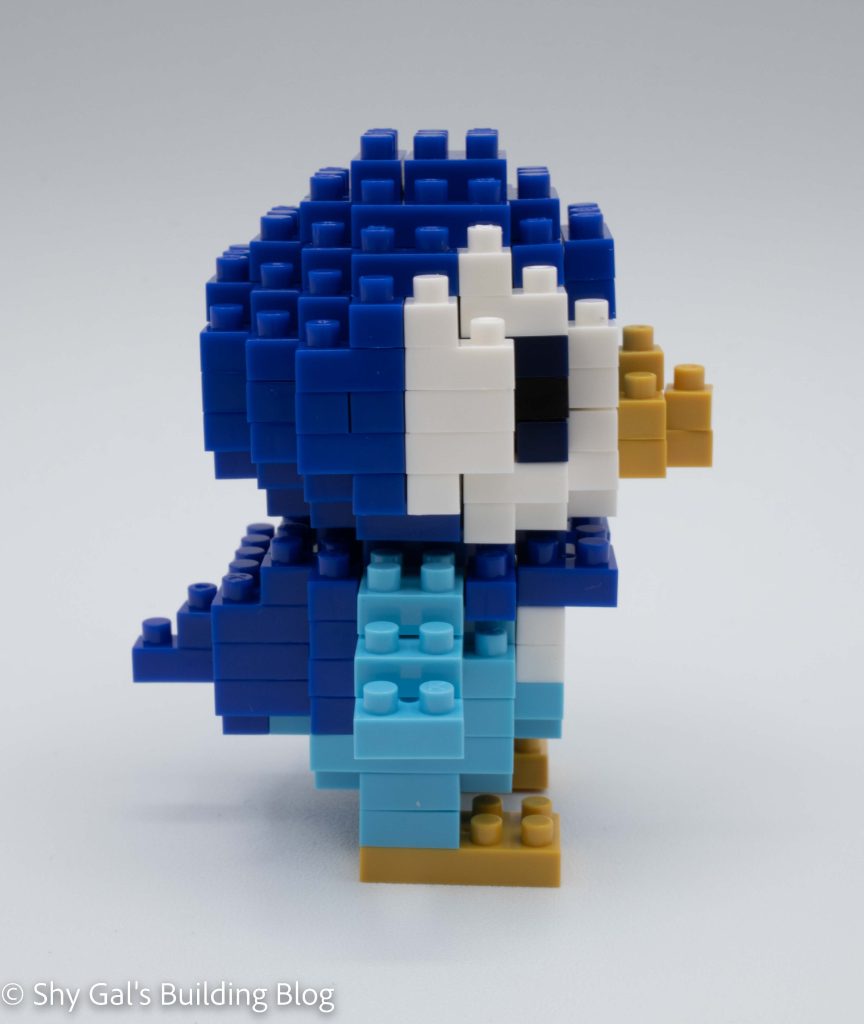
Piplup side view

The second part of the build is the head. The head begins with a layer of blue and white bricks. The head is built by adding layers of bricks. As you add the layers of bricks, you add the details of the beak and eyes. In my opinion, they are super large for the build, so it looks a little funny. The beak looks closer to yellow than the gold bricks that come with a kit in the directions. When finishing the head, I had the unusual problem that the top layer caved in a bit, so adding the final layer of bricks was challenging.

To finish the build, there are a couple steps. First, you need to attach the head to the body. It is a bit challenging to tell where exactly where the head goes. Then you add a final bottom layer of bricks. The final step is to add the feet to the build.

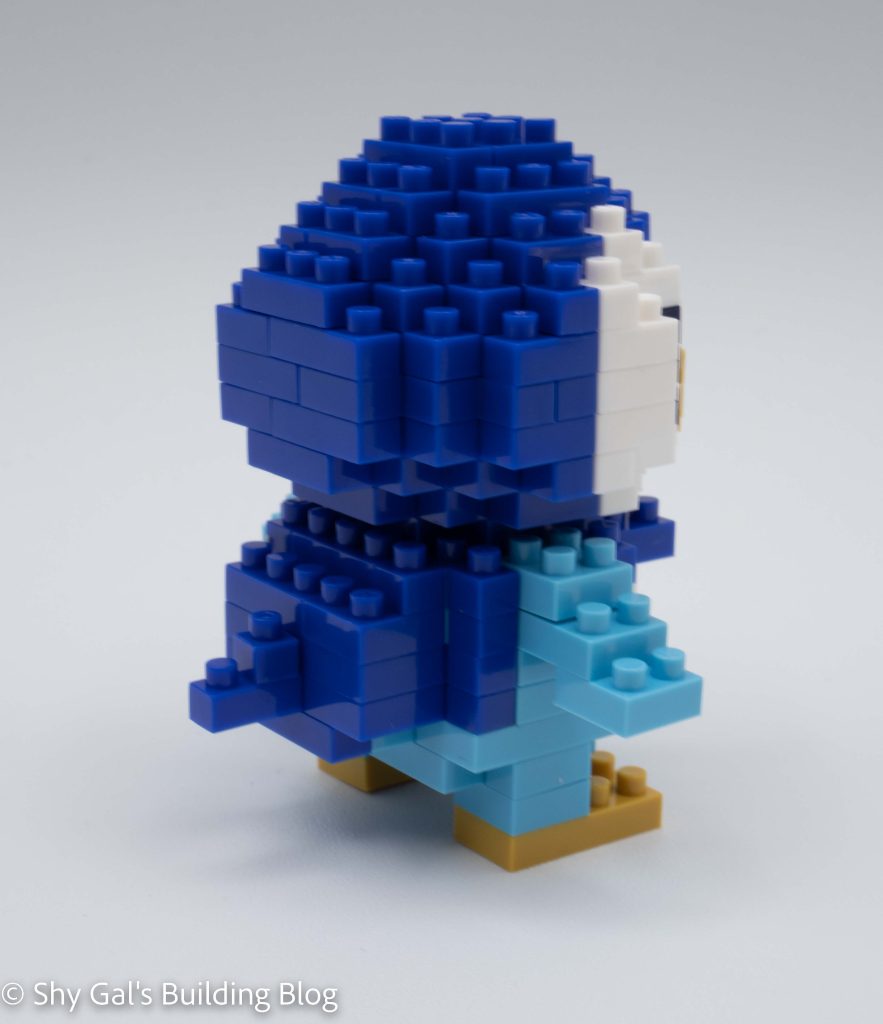
Piplup back 3/4 view

Things I liked:

  • Piplup is one of my favorite pokemon, so I’m glad we got a build for him

Things I didn’t like:

  • His eyes are huge and look too big
  • I’m not sure if changing out the gold bricks with yellow bricks would look better

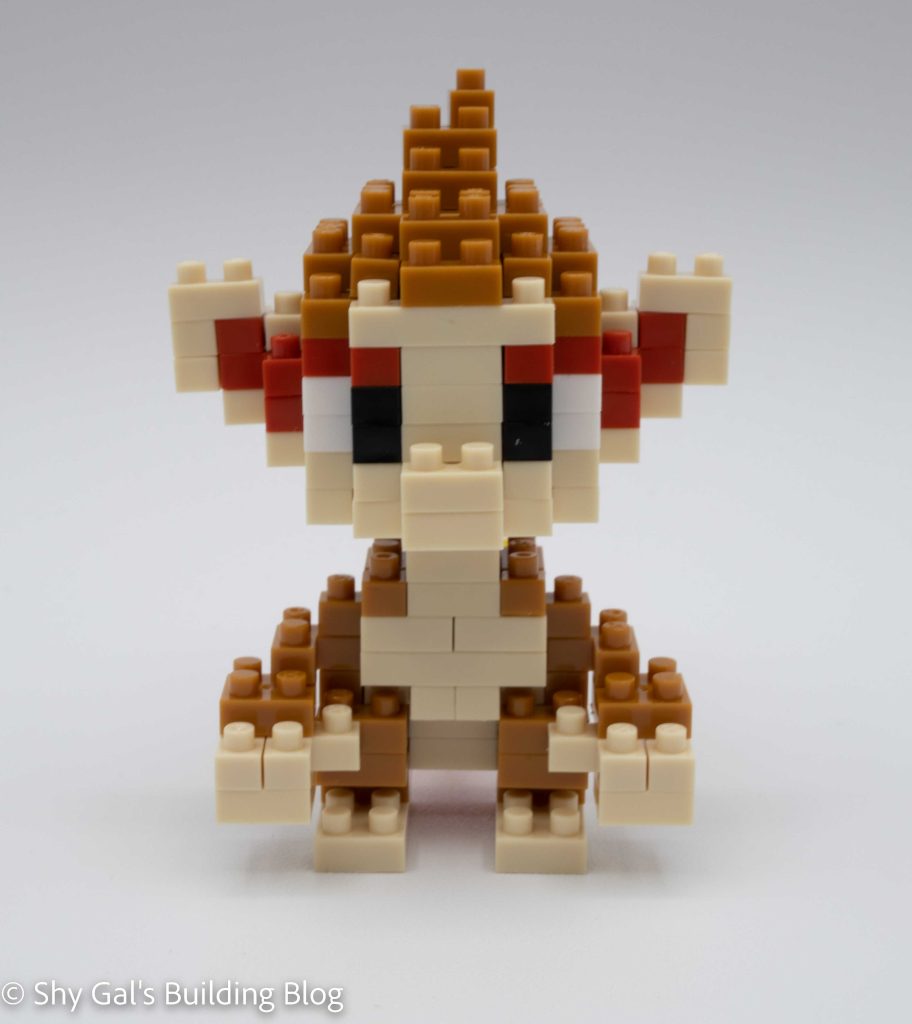
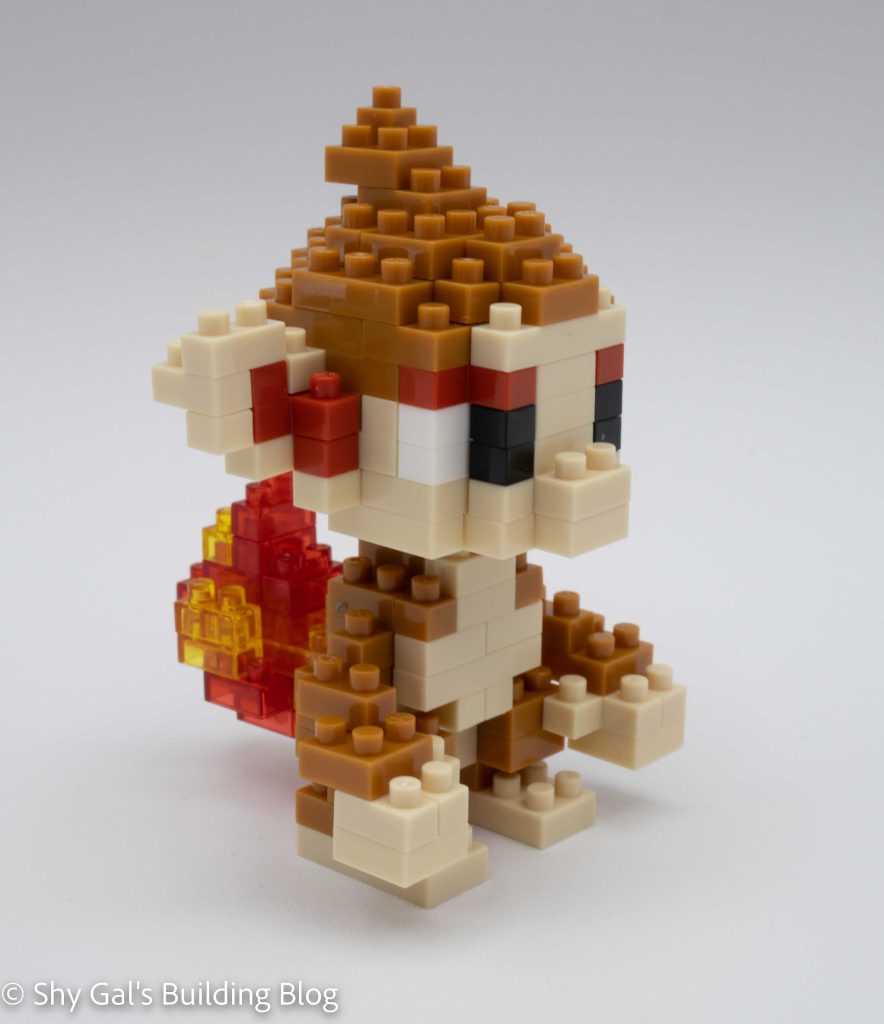
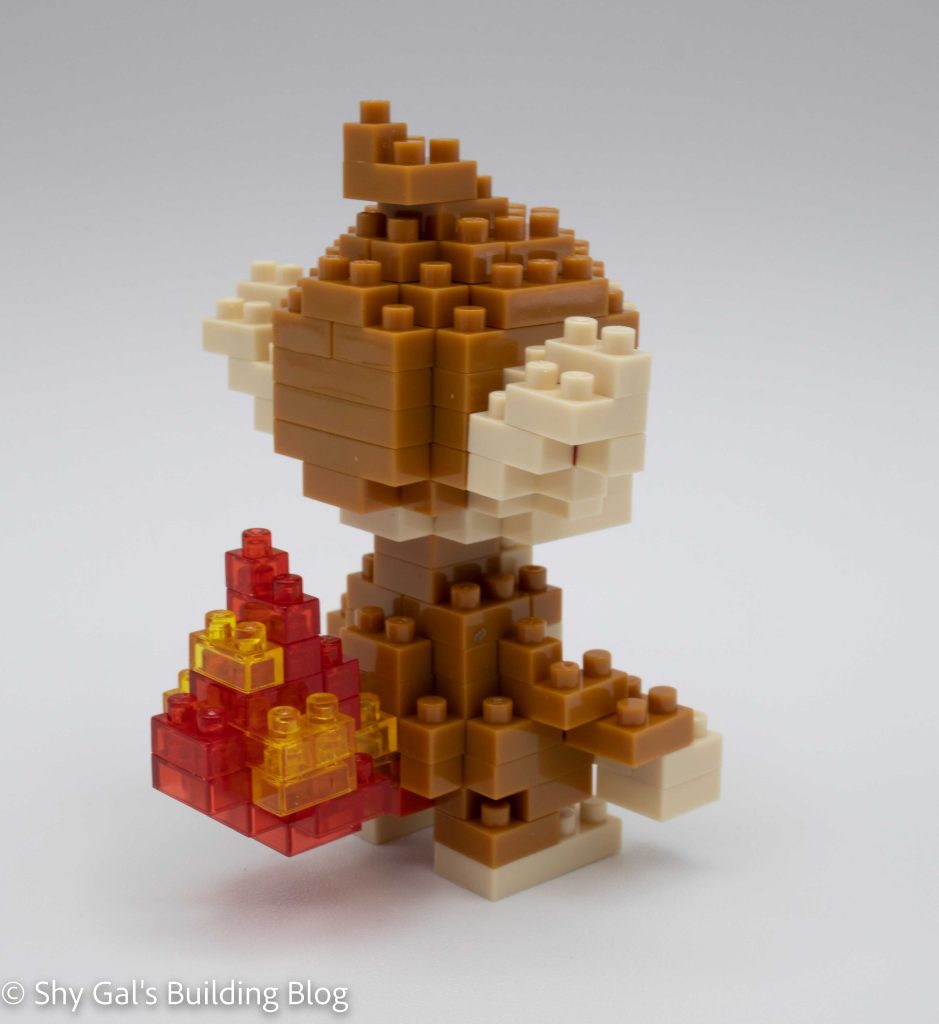
Review of nanoblock Chimchar NBPM_078

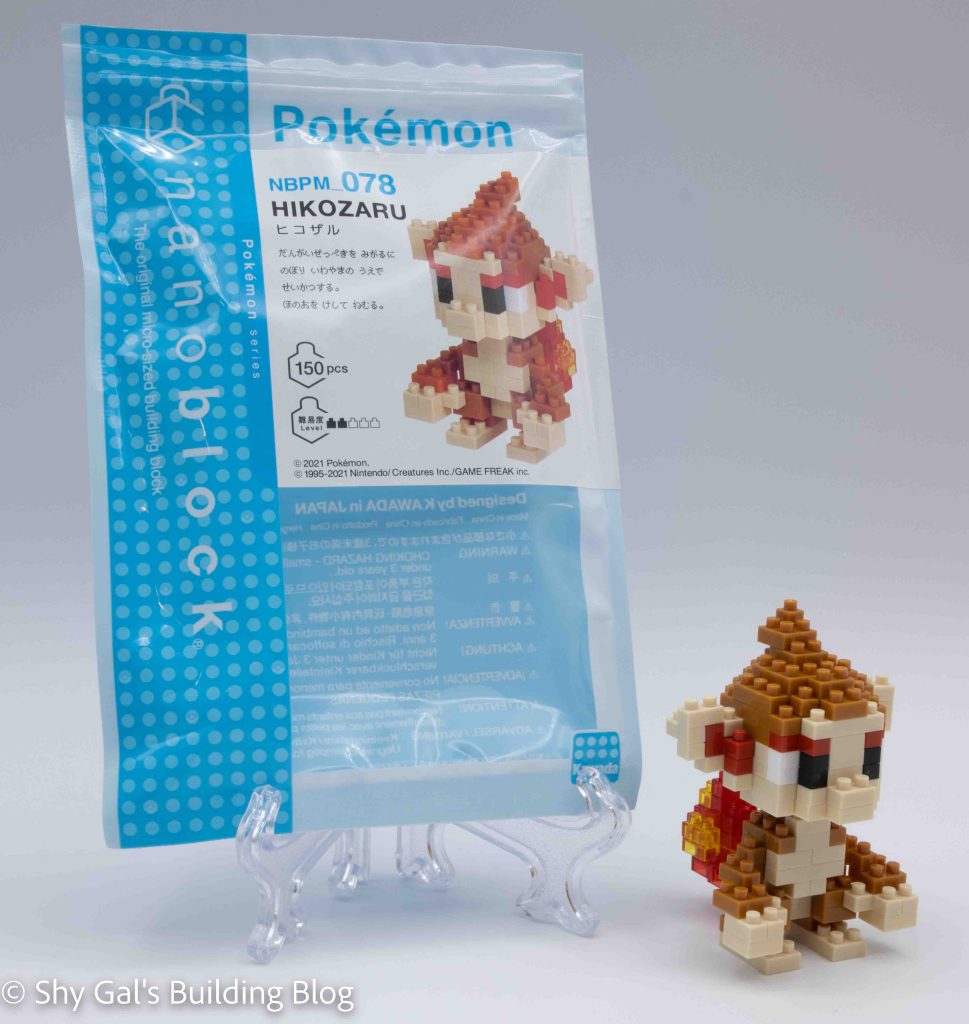
Chimchar pacakge and build

This post is a review of the nanoblock Chimchar build. Chimchar is part of the nanoblock Pokemon collection. Wondering what else is part of the Pokemon Collection? Click here for a list.

Names:

  • English: Chimchar
  • Japanese: Hikozaru

Number: NBPM_078

Number of Pieces: 150

Difficulty Rating: 2/5

Chimchar front view

The Chimchar nanoblock build has 2 parts. There is a head and a body.

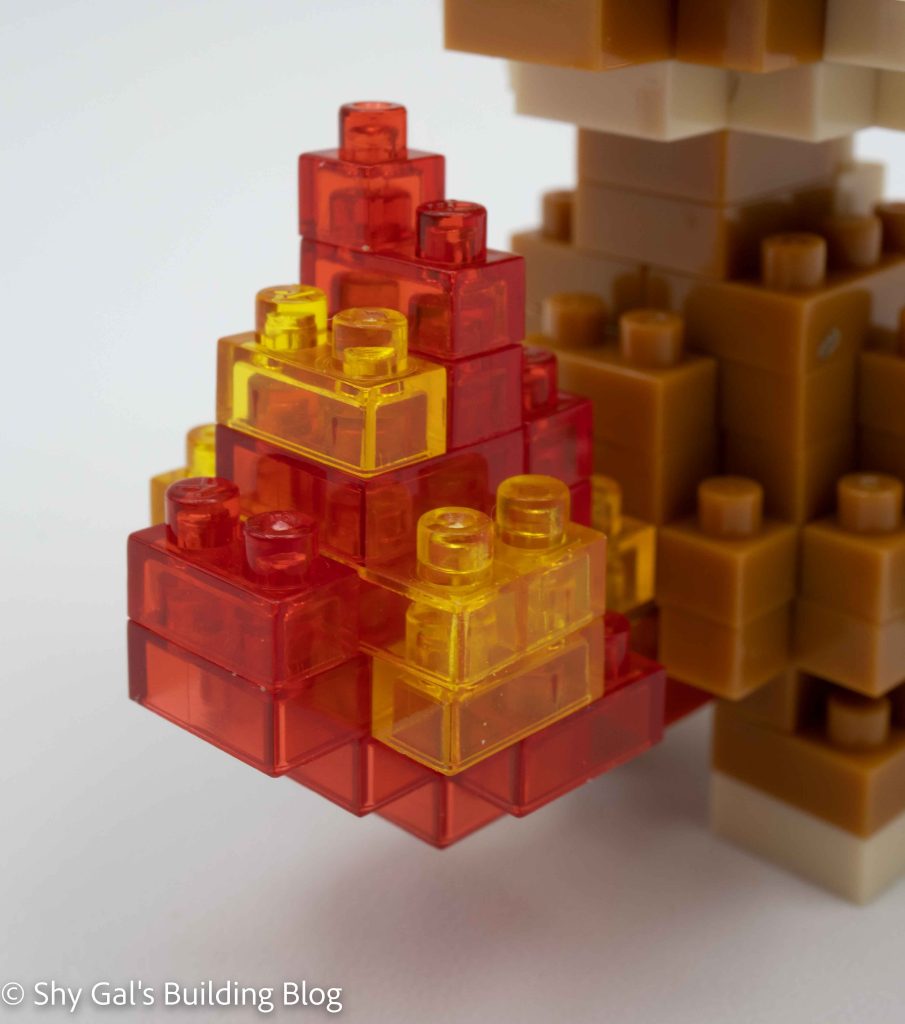
The build begins with the body. It begins with a layer of bricks, including clear bricks. The clear bricks will become Chimchar’s flame tail. This is a detail that mirrors the builds of the Charmander family.

Chimchar front 3/4 view

The rest of the body is made of cream and brown bricks. The body and the tail are built together in layers of bricks. At some point, you attach the arms. This can be a tricky step because the bricks are chained together. Meaning it is easy for a brick lower in the chain to fall off even after the top is secured. You finish building the body by eventually adding the feet.

After building the body you move on to the head. The head begins with a layer of cream bricks. The head is built up in layers of mostly brown and cream. As you build the layers, you add the details of the eyes, nose, and ears.

The build is completed by combining the head and the body. I personally had some difficulty lining up the head so it was straight on the body.

Chimchar back 3/4 view

Things I liked:

  • The clear blocks for the flame on the tail are similar to how they are used in the Charmander family.

Things I didn’t like:

  • It was a pain to get the head centered when I combined the head and the body
Chimchar tail detail

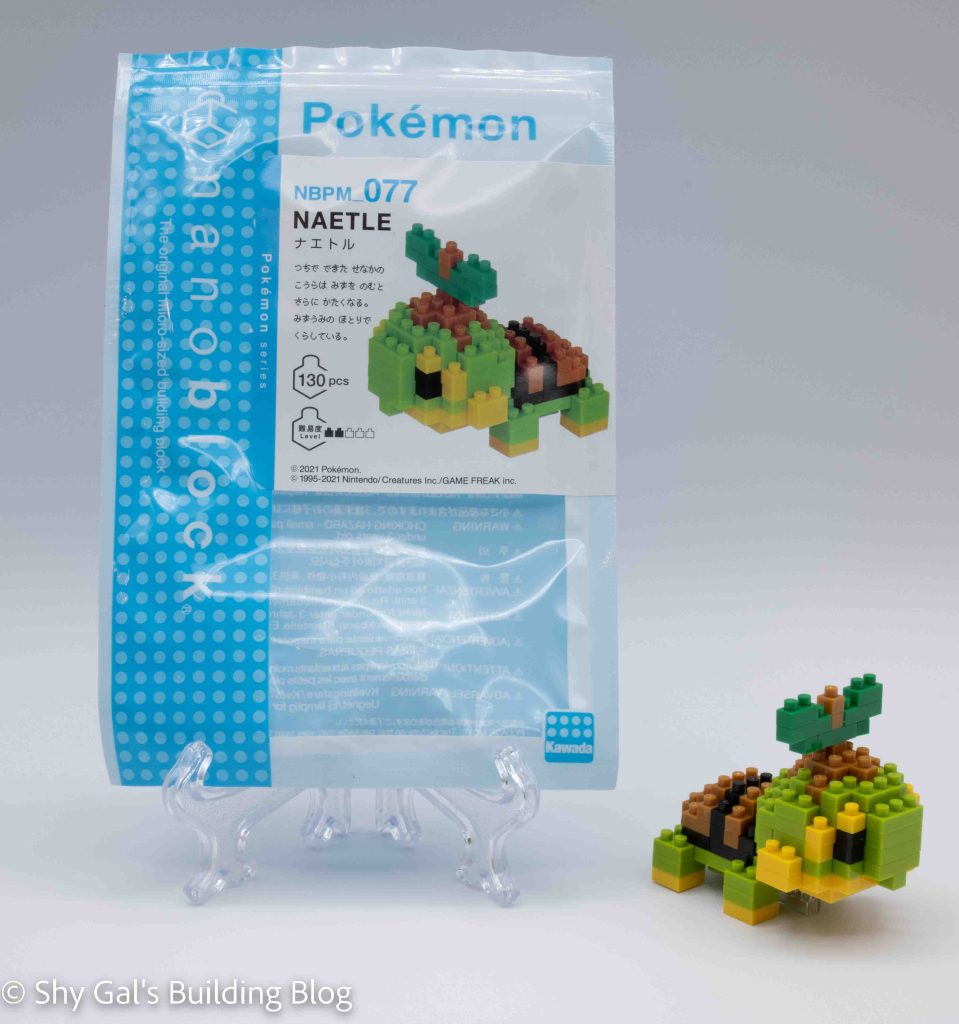
Review of nanoblock Turtwig NBPM_077

Turtwig package and build

This post is a review of the nanoblock Turtwig build. Turtwig is part of the nanoblock Pokemon collection. Wondering what else is part of the Pokemon Collection? Click here for a list.

Names:

  • English: Turtwig
  • Japanese: Naetle

Number: NBPM_077

Number of Pieces: 130

Difficulty Rating: 2/5

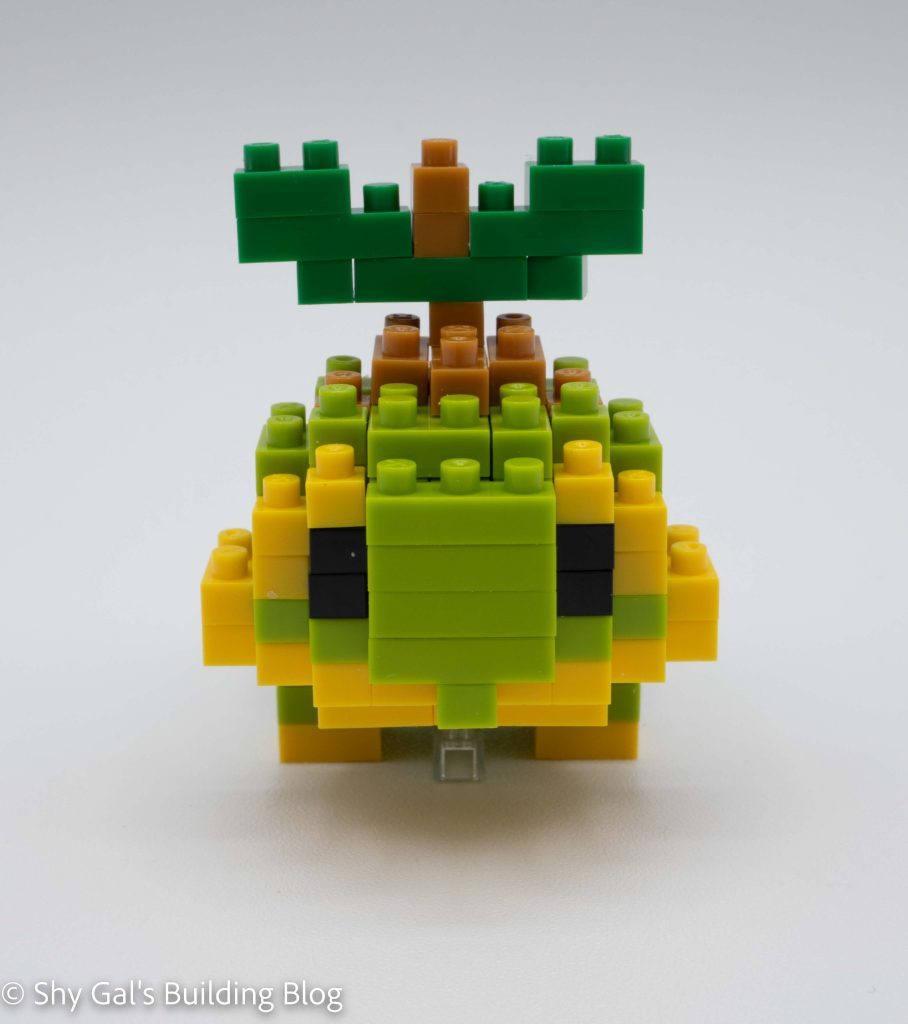
Turtwig front view

This build is made up of 2 major parts. There is the head and the body.

The head begins with a layer of yellow and green bricks. The head is built in layers of green, yellow, and black bricks. The eyes are added by having black bricks that remain visible. Once the head is mostly built, you add a cap of brown to complete the head.

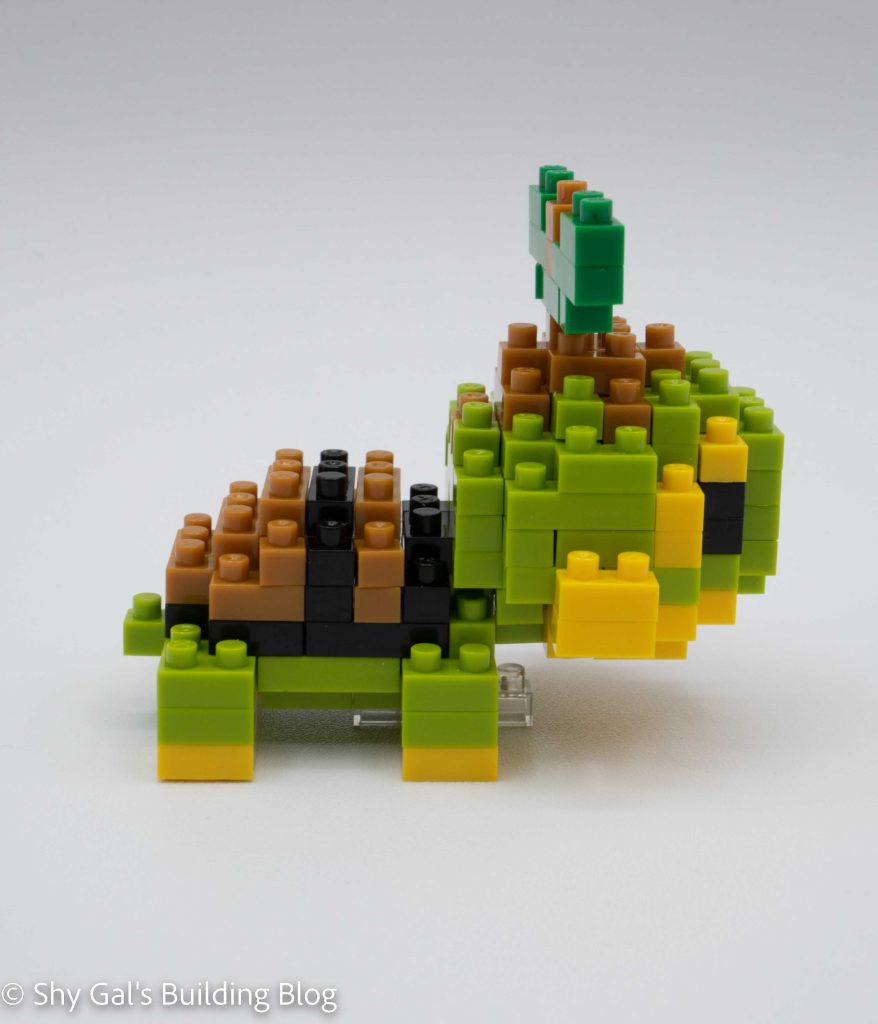
Turtwig side view

The next chunk that is built is the body. Like the head, the body is built in layers. In this case, the base is green. Using brown and black bricks, you then build the hump on Turtwig’s back. After you build him up, you flip the build over and add the feet and a brick to keep the build from tipping over due to the size of the head.

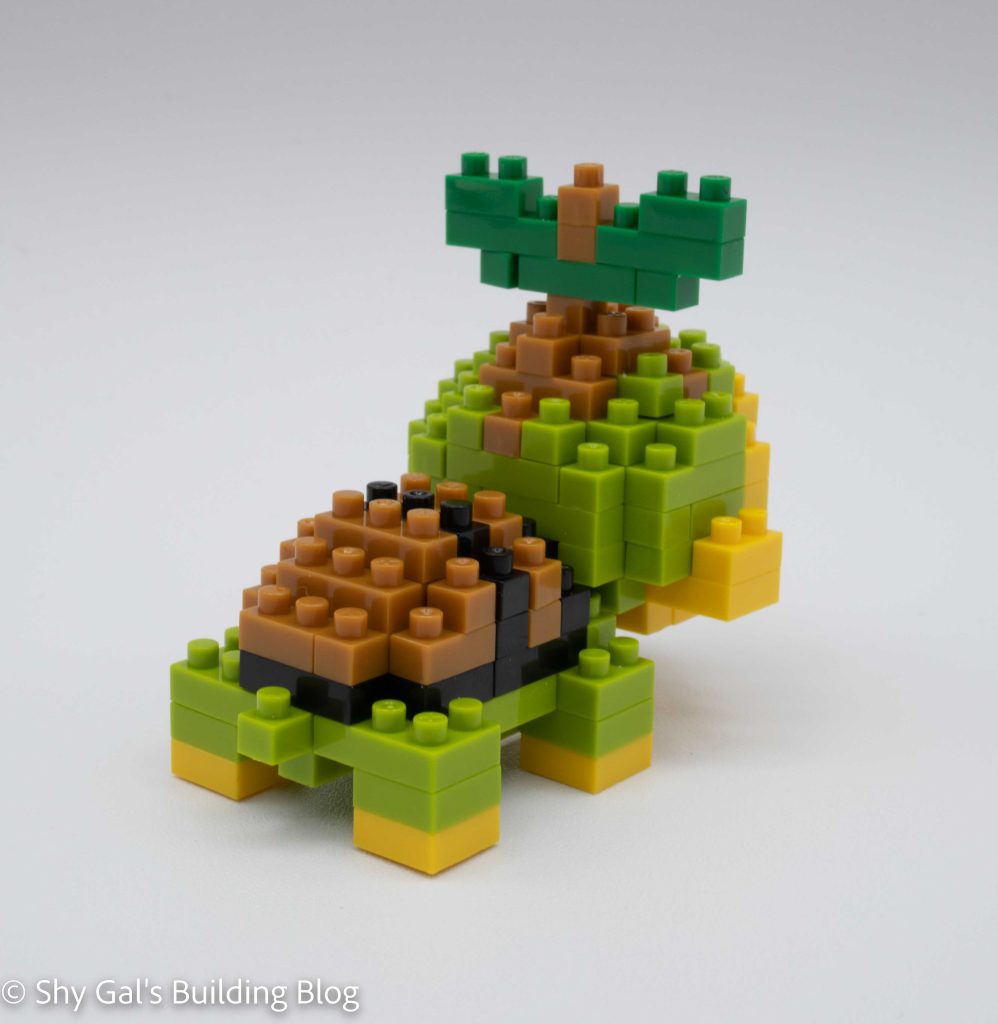
Turtwig back 3/4 view

Now that you have the 2 major pieces, it is time to combine the head and the body. The final step is to add the leaf on Turtwig’s head.

Things I liked:

  • I think it’s a cute build

Things I didn’t like:

  • The starters keep getting a bit bigger, so they don’t match in size to the other starters
  • I think the leaf on his head would look better if it was the lighter green
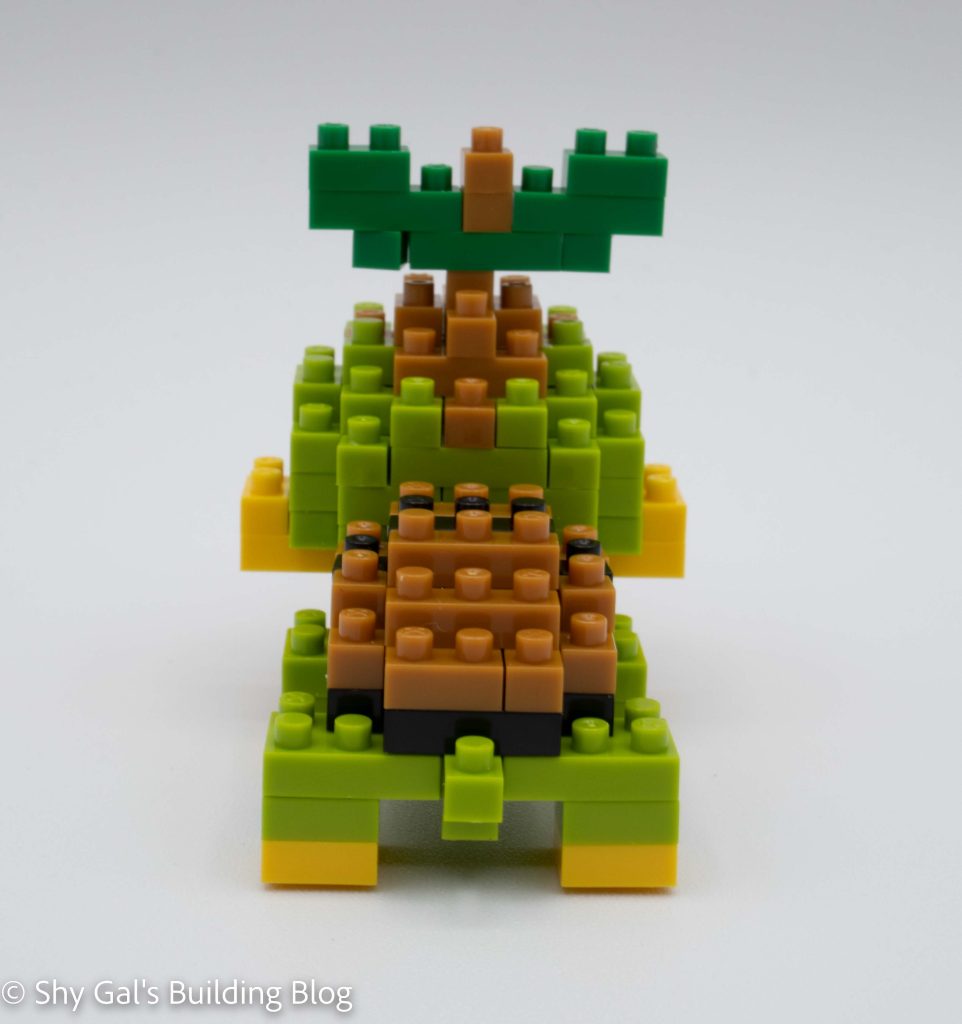
Turtwig back view

Review of nanoblock Mega Venusaur NBPM_092

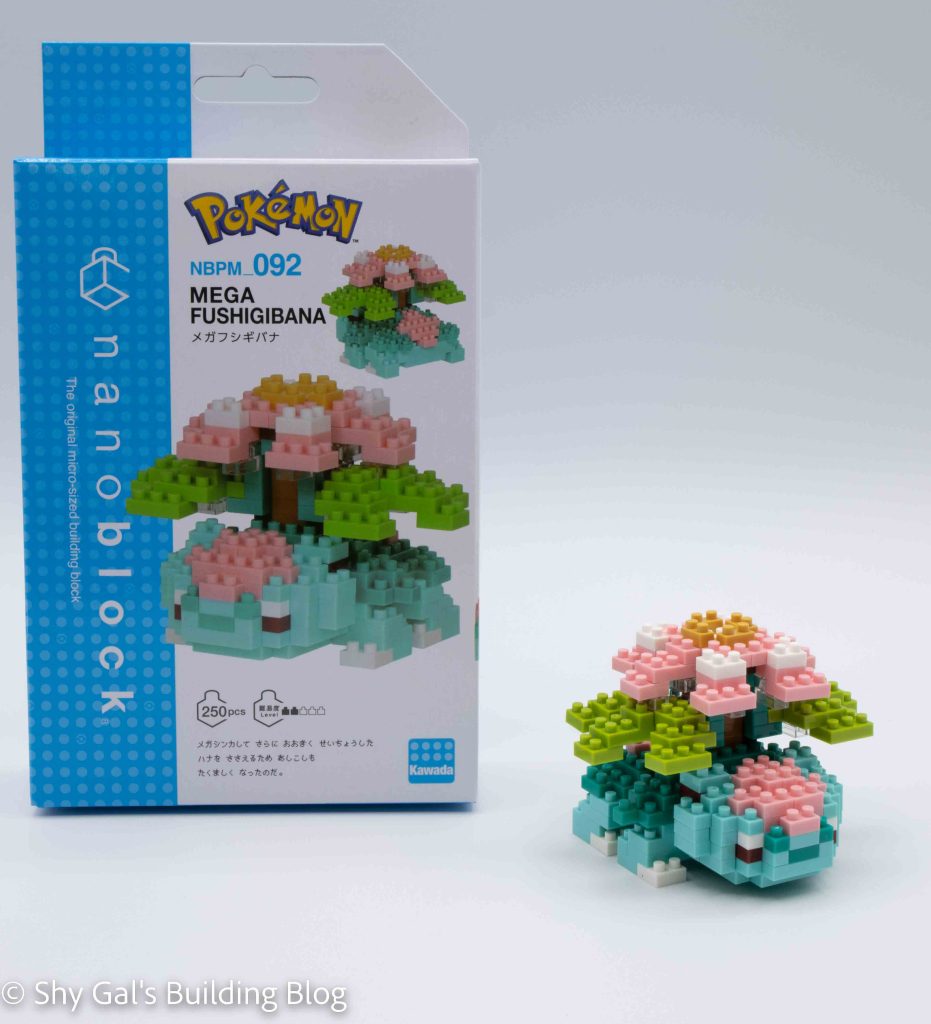
Mega Venusaur build and box

This post is a review of the nanoblock Mega Venusaur build. Mega Venusaur is part of the nanoblock Pokemon collection. Wondering what else is part of the Pokemon collection? Click here for a list.

Names:

  • English: Mega Venusaur
  • Japanese: Mega Fushigibana

Number: NBPM_092

Number of Pieces: 250

Difficulty Rating: 3/5

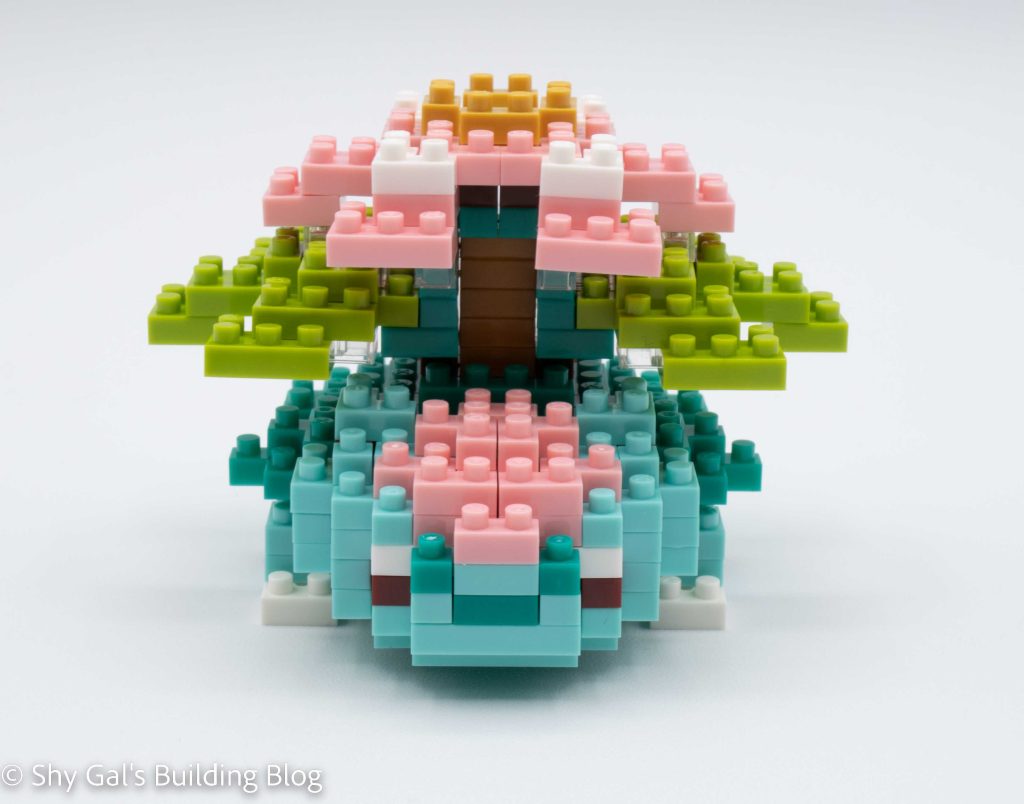
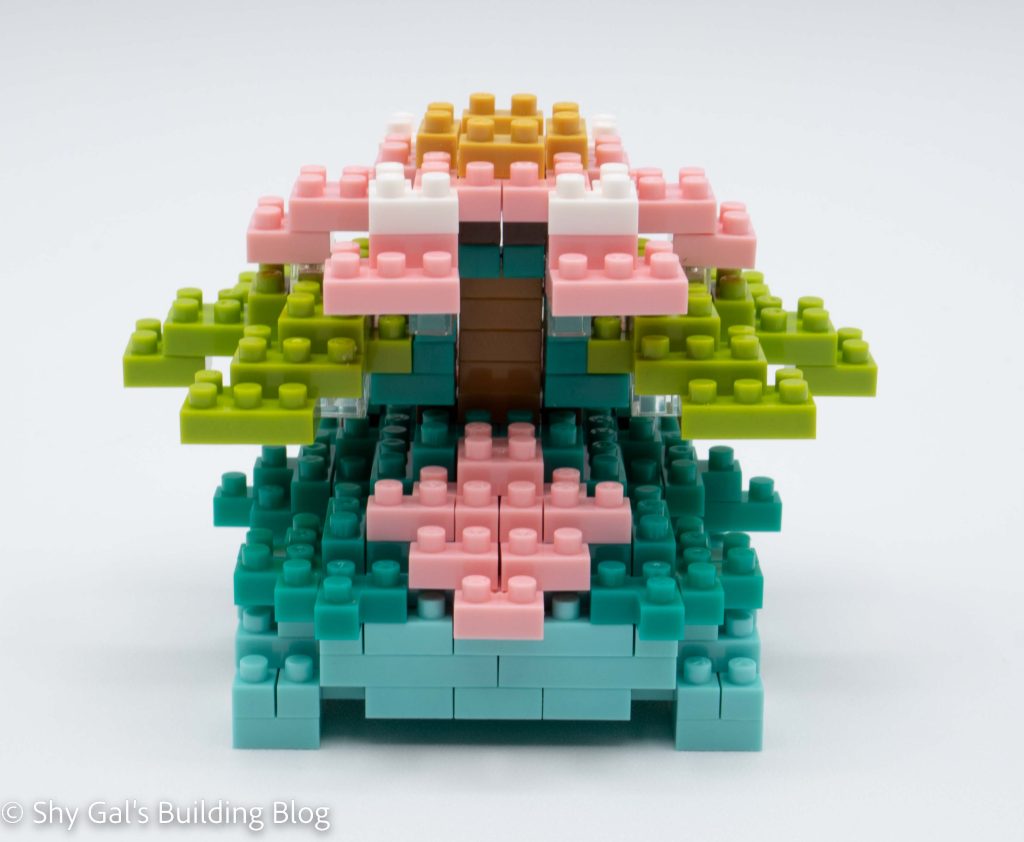
Mega Venusaur front view

Mega Venusaur is the mega evolution of Venusaur. This build is similar in size to the original Venusaur build. Mega Venusaur looks like a normal Venusaur, except the flower on its back is taller and much larger.

This build has 2 major sections. There is the body and the flower on Mega Venusaur’s back.

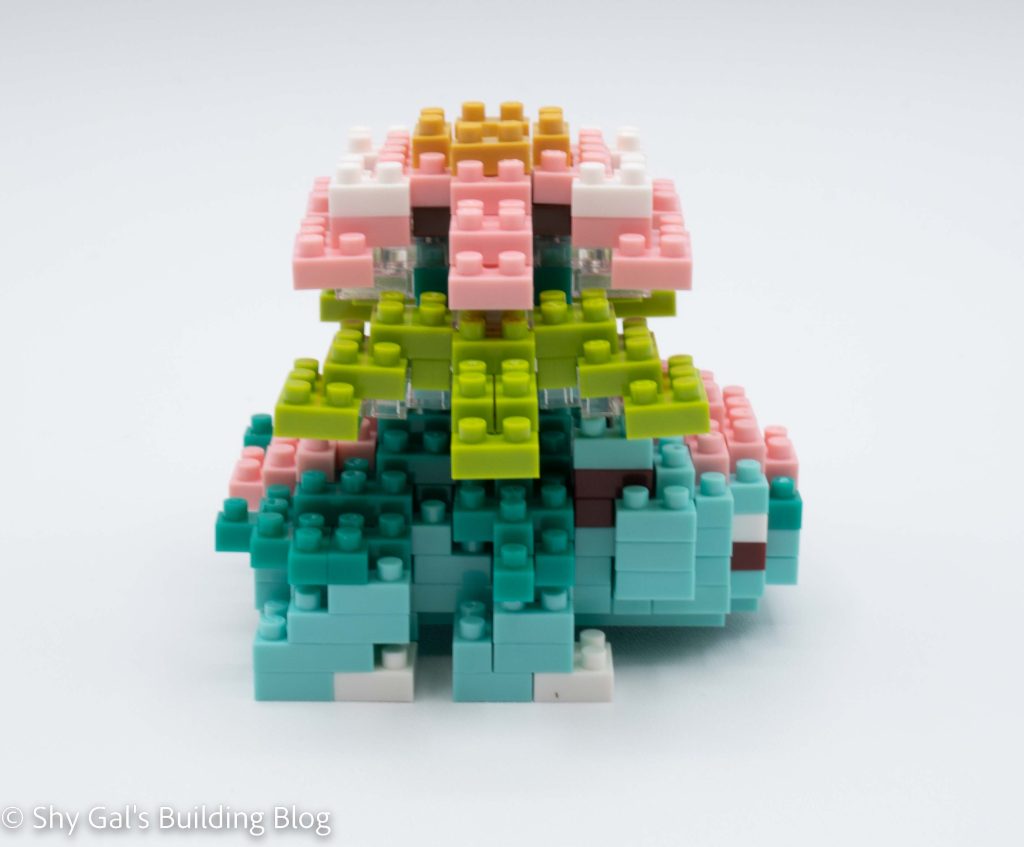
Mega Venusaur side view

The first section you build is the body. The first few steps create a large base. from there, the body is built in straightforward layers. The hardest part is noticing there is a dark red and dark brown brick, and the red is used to create the eyes. I didn’t notice the colors, so I needed to take sections of the build apart to fix the mistake.
The body adds details to the build, such as the shadows under the leaves and the pink from the flowers on Venusaur.

Mega Venusaur back view

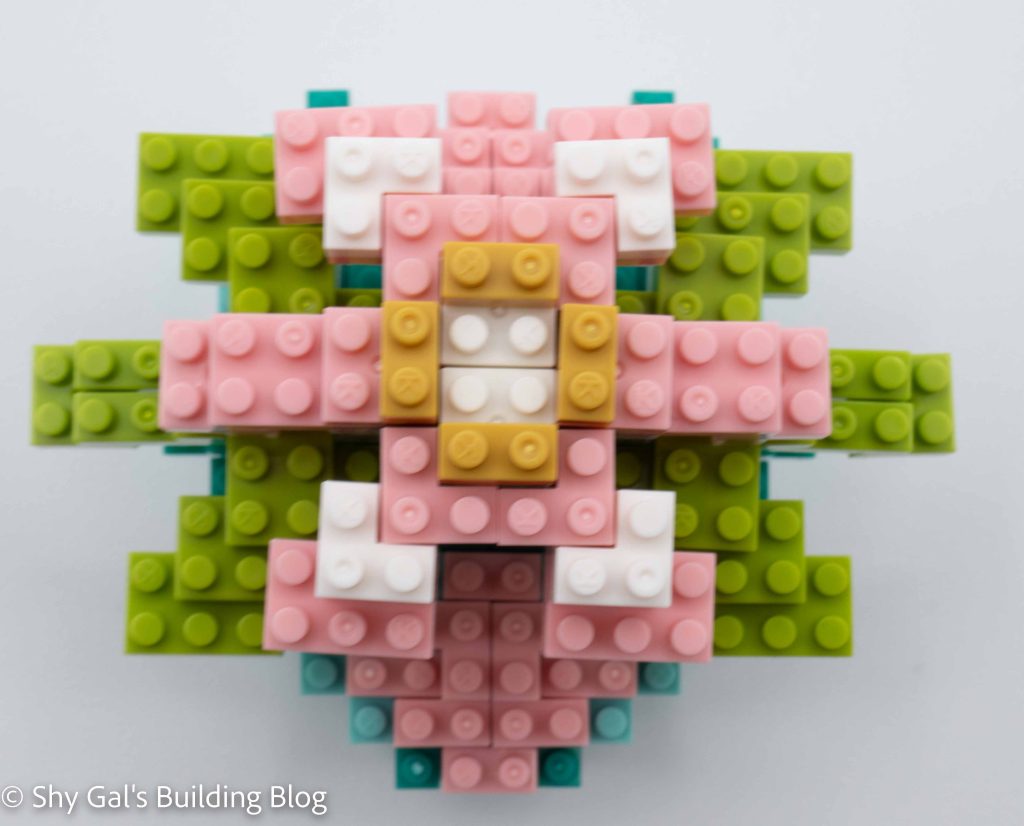
After building the body, it’s time to build the flower on Mega Venusaur’s back.

The flower’s first steps create the leaves on one side of the flower. Next, you build leaves for the other side. Then you build the center stem of the flower. The first 3 parts of the flower are combined to create the base of the flower.

After building the base, it’s time to build the actual flower. The directions for building the flower are very straightforward.

The final step is to connect the flower to the body.

Mega Venusaur flower detail

Things I liked:

  • I really like that the side is pretty close to the original Venusaur
  • I like the amount of detail in the flower

Things I didn’t like:

  • The flower in the final build is a little flimsy

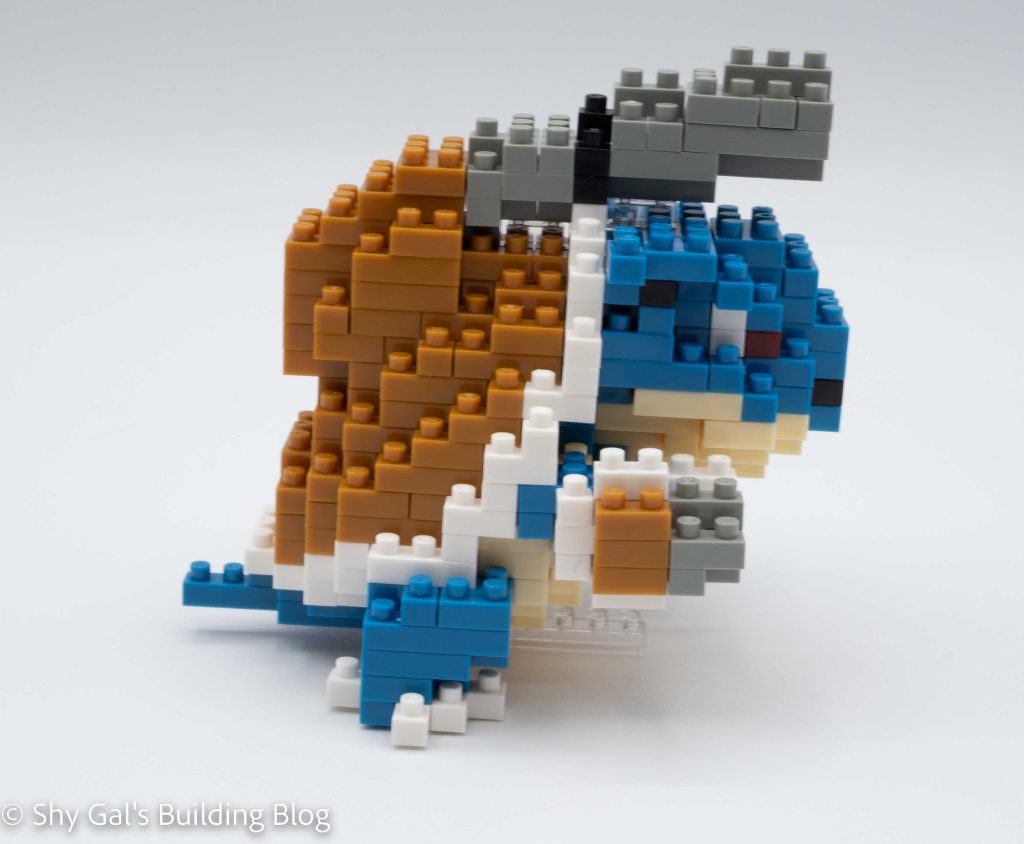
Review of nanoblock Mega Blastoise NBPM_093

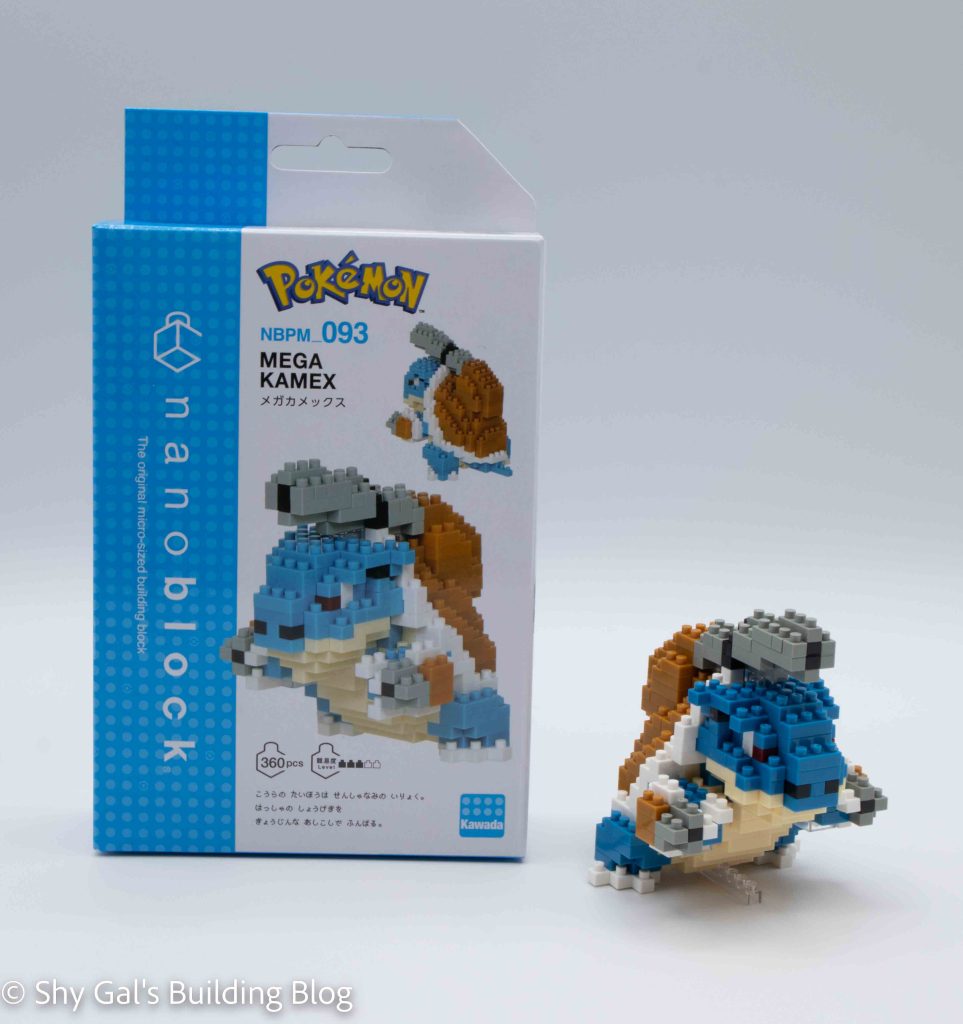
Mega Blastoise build and box

This post is a review of the nanoblock Mega Blastoise build. Mega Blastoise is part of the nanoblock Pokemon collection. Wondering what else is part of the Pokemon collection? Click here for a list.
Names:

  • English: Mega Blastoise
  • Japanese: Mega Kamex

Number: NBPM_093

Number of Pieces: 360

Difficulty Rating: 3/5

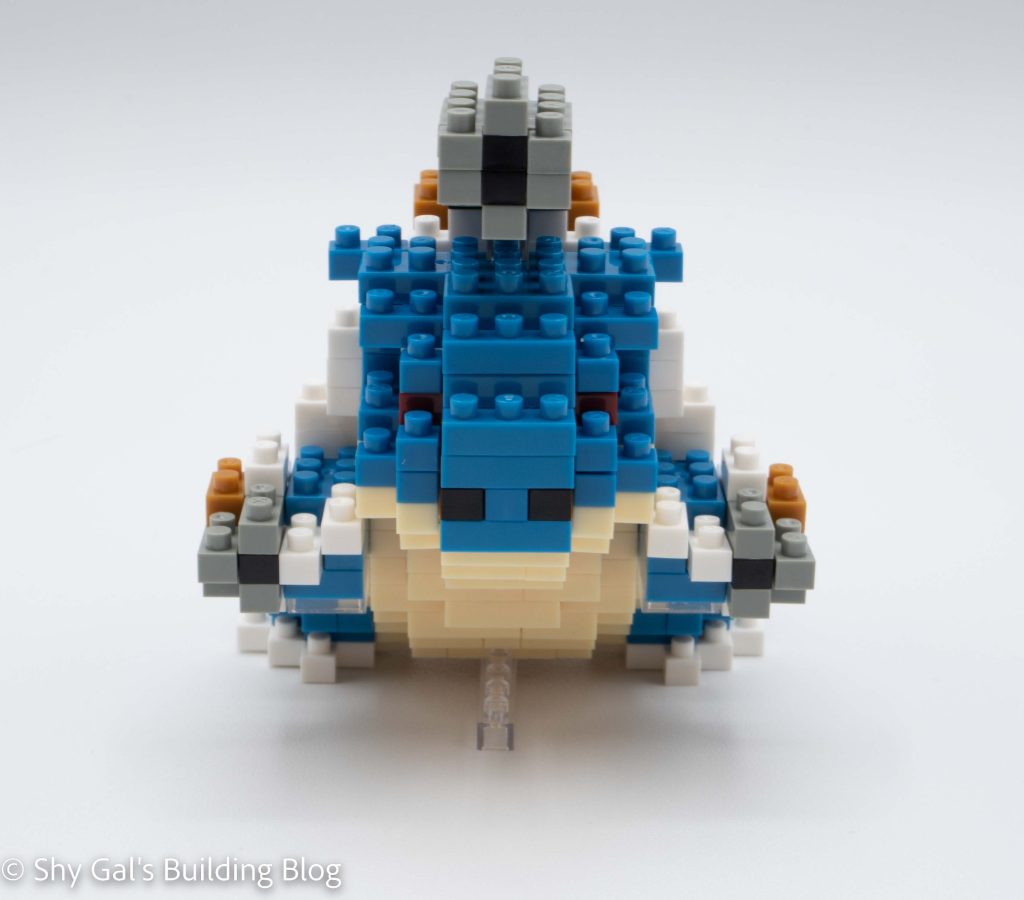
Mega Blastoise front view

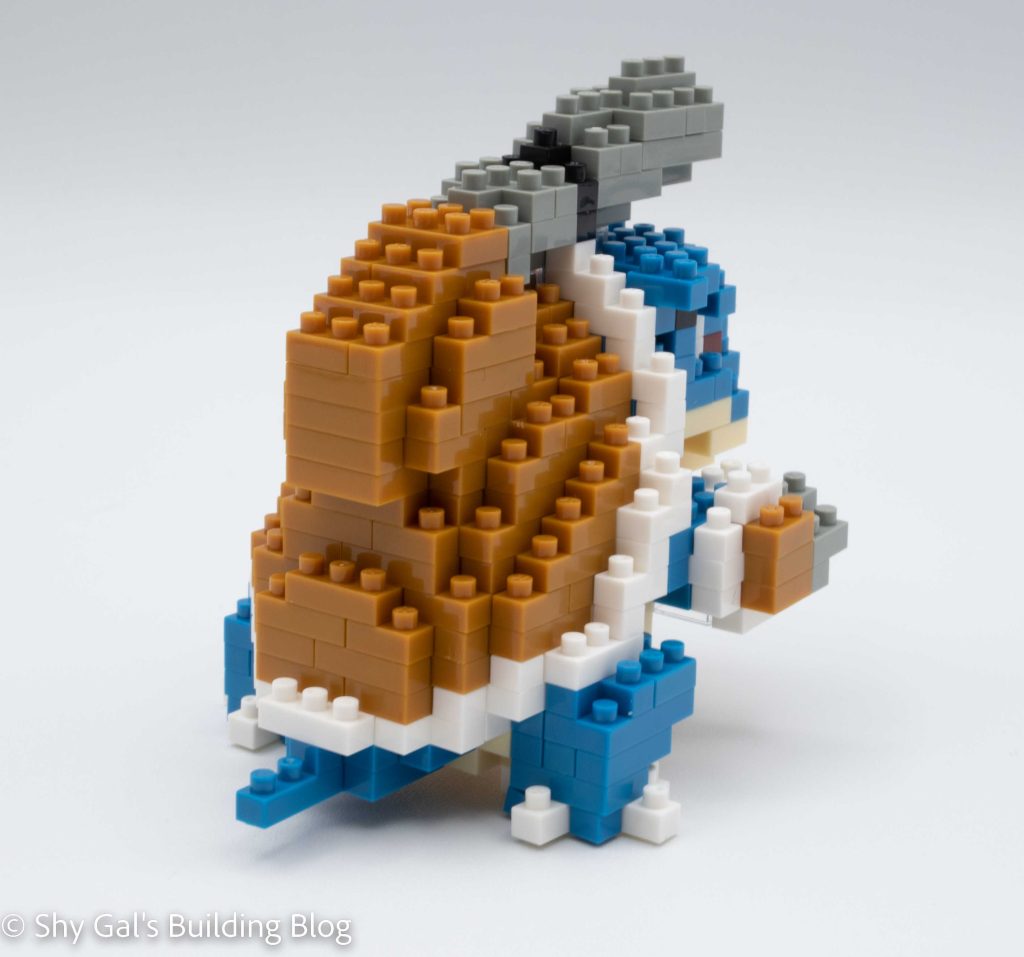
Mega Blastoise is the mega evolution of Blastoise. This build is similar in size to the original Blastoise build. Mega Blastoise looks like a normal Blastoise, except its cannons are on its hands and the center of the back.

Mega Blastoise side view

The build begins by creating the base layers of cream and blue. Each section is built separately and connected together to create a complete base.

The next several steps are building the body in layers. It was a bit tricky because the base and layers were flexible for the first several steps, so the build kept sliding apart. After a few layers, there was enough overlap, so the build was much more solid.

The next step is to build the arm cannons. The cannons are straightforward and attached easily. The next step is to lock the arms in place and begin working on the head.

Mega Blastoise back 3/4 view

The main section of the build is completed in layers. Once you start working on the head, the build will tip over if you set the build down.
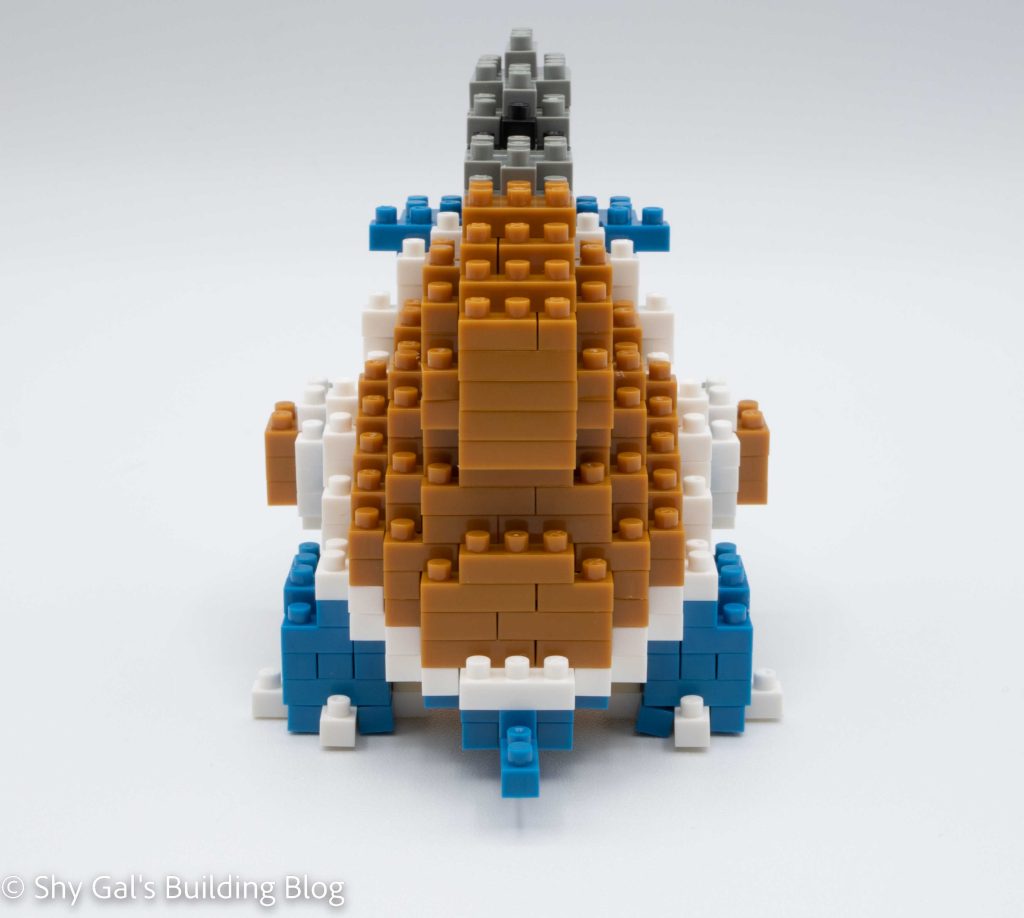
The next step is to build the cannon on Mega Blastoise’s back. The cannon is fairly straightforward but flexible, so it is tricky to line up in the first couple of steps.

The final step is to finish off the feet. This step is by far the hardest of the build. It is hard to see where exactly you need to put the bricks. I could figure it out by looking at the box and the instructions.

Mega Blastoise back view

Things I liked:

  • I really like that the side is pretty close to the original Blastoise
  • I like the amount of detail in the build overall

Things I didn’t like:

  • How hard the last step is to figure out

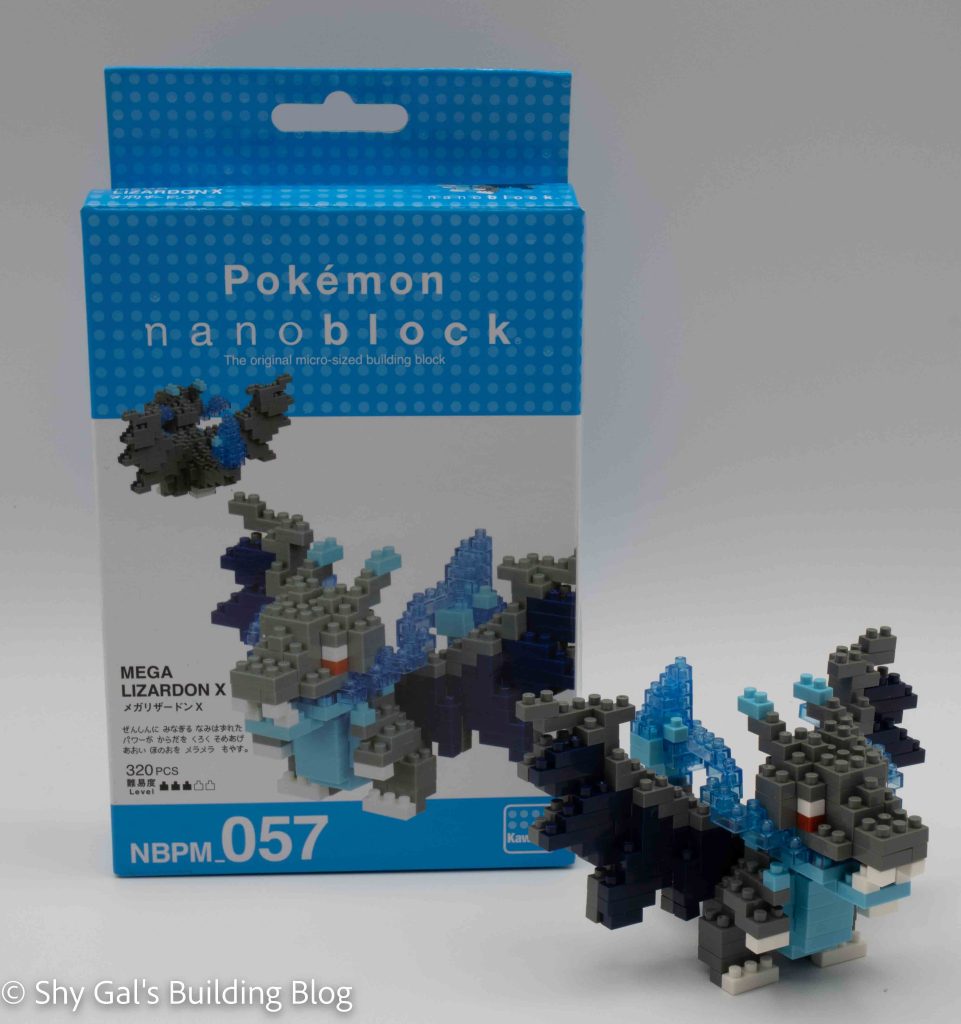
Review of nanoblock Mega Charizard X NBPM_057

Mega Charizard X build and box

This post is a review of the nanoblock Mega Charizard X build. Mega Charizard X is part of the nanoblock Pokemon collection. Wondering what else is part of the Pokemon Collection? Click Here for a list.

Names:

  • English: Mega Charizard X
  • Japanese: Mega Lizardon X

Number: NBPM_057

Number of Pieces: 320

Difficulty Rating: 3/5

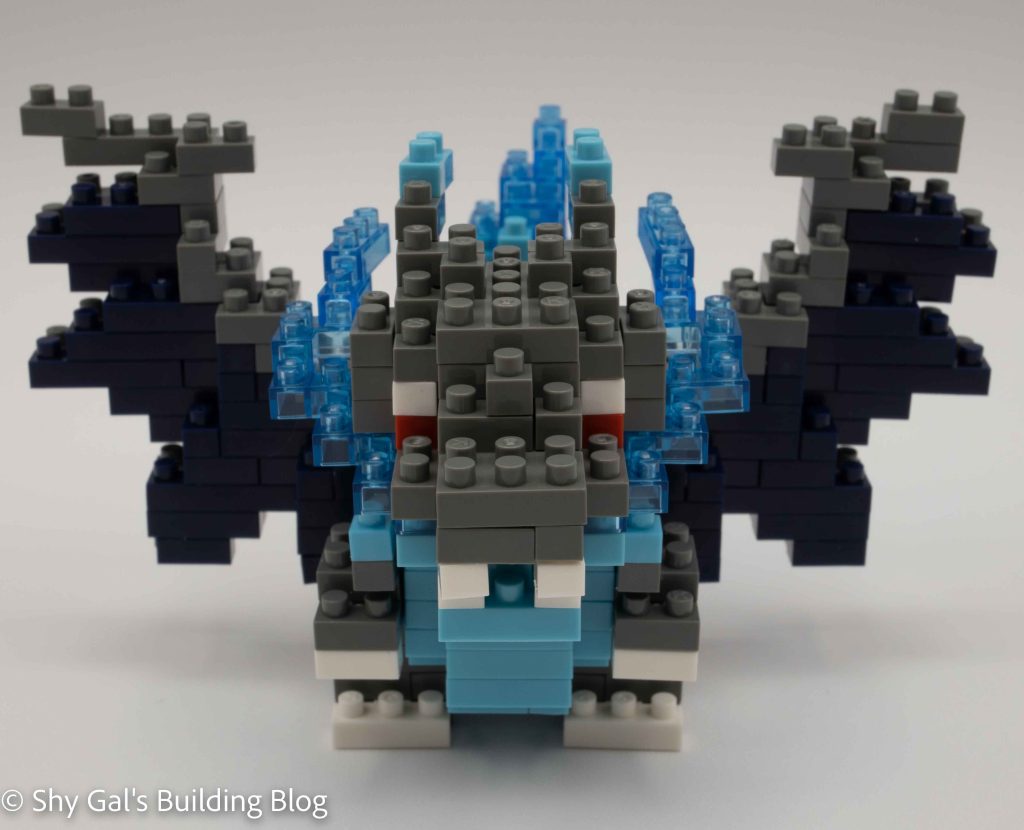
Mega Charizard X front view

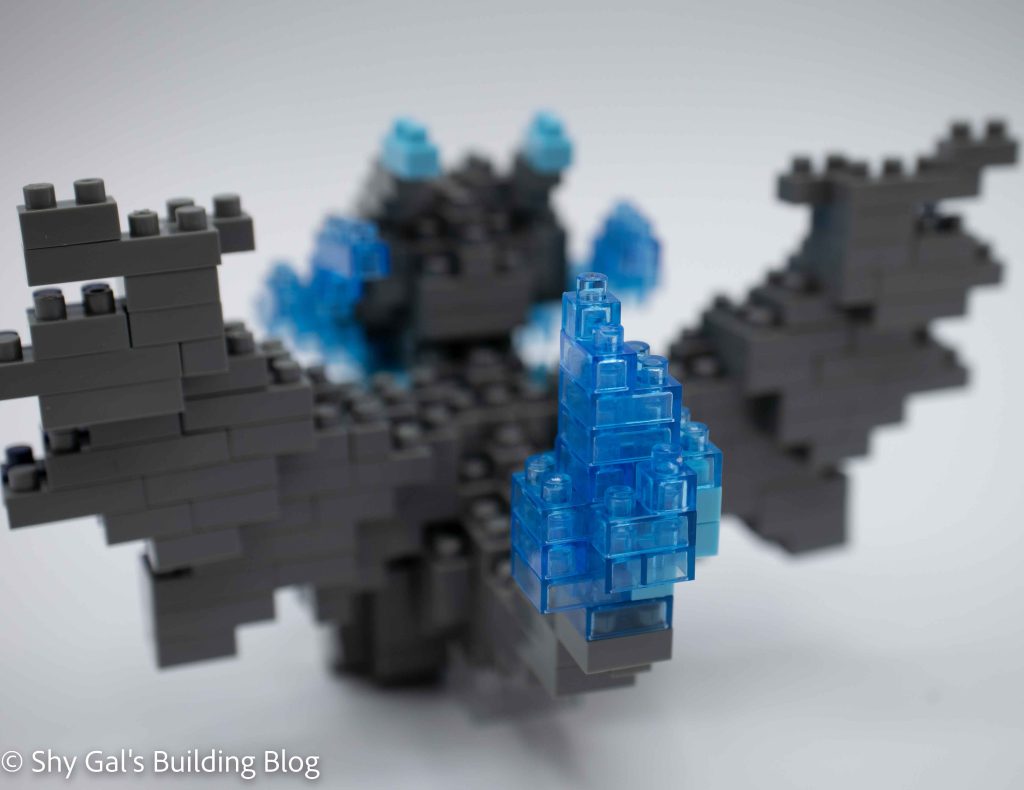
Mega Charizard X was originally in Pokemon X. Mega is used to describe Pokemon that have mega evolved, which was introduced in generation 6. Pokemon X has its own mega evolution named Mega Charizard X. Mega Charizard is grey with blue flames instead of the standard orange.

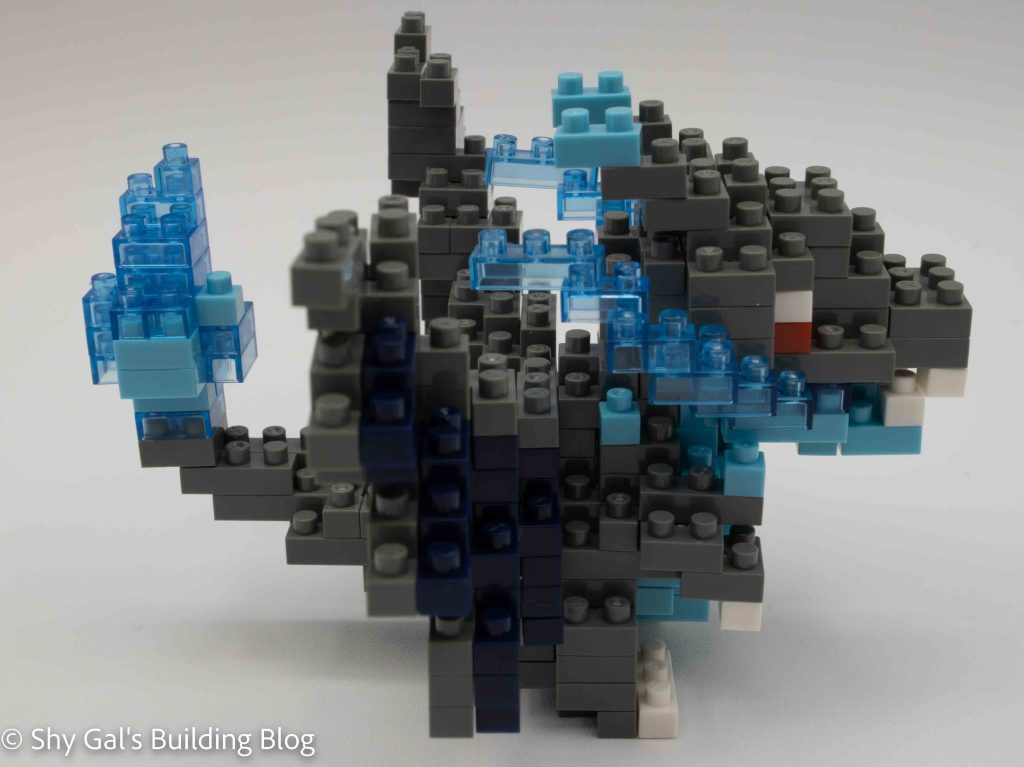
Mega Charizard X side view

This built is breaks the building focus into several parts. There is the body, wings, tail flame, and head. Overall the directions are clear as to which colors to use and when.

You begin by building the body. You start with a base layer and build up. The arms on my build are a bit loose and feel like they want to fall off the studs holding them in place. The build is straightforward other than the last step when you flip the build upside down. It is hard to tell where exactly where the underside bricks go.

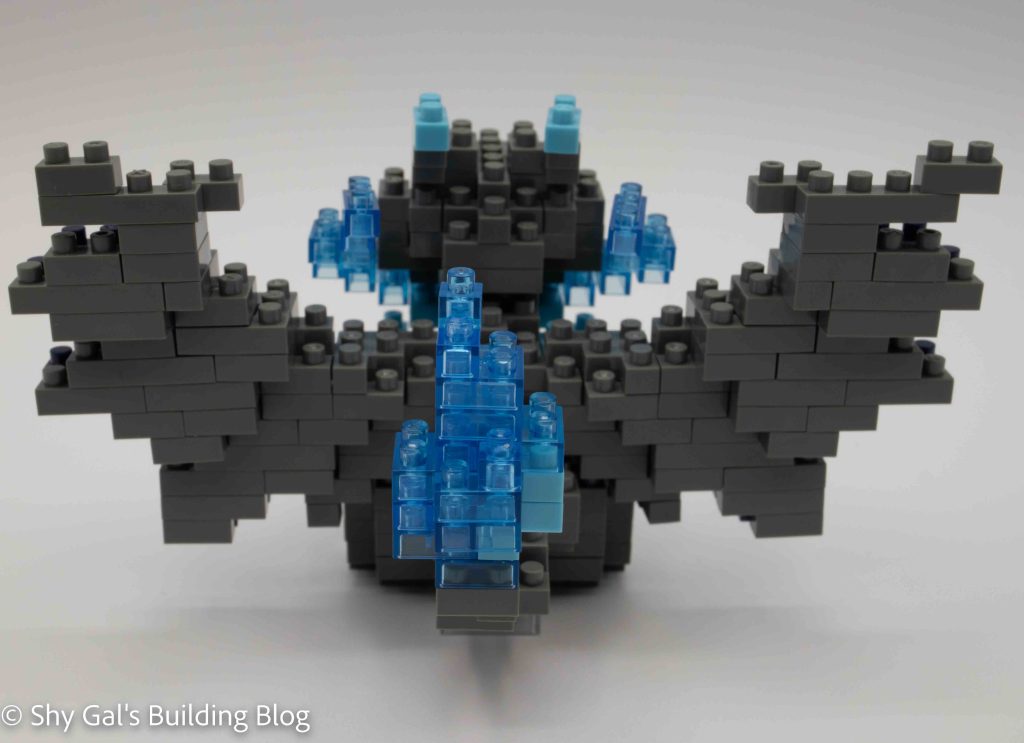
Mega Charizard X back view

The next step is to build the pair of wings. I have trouble getting wings to line up because they are so narrow. The directions are clear as to when and where to use each brick. They nicely and solidly attached to the body and didn’t cause the body to tip, which was nice.

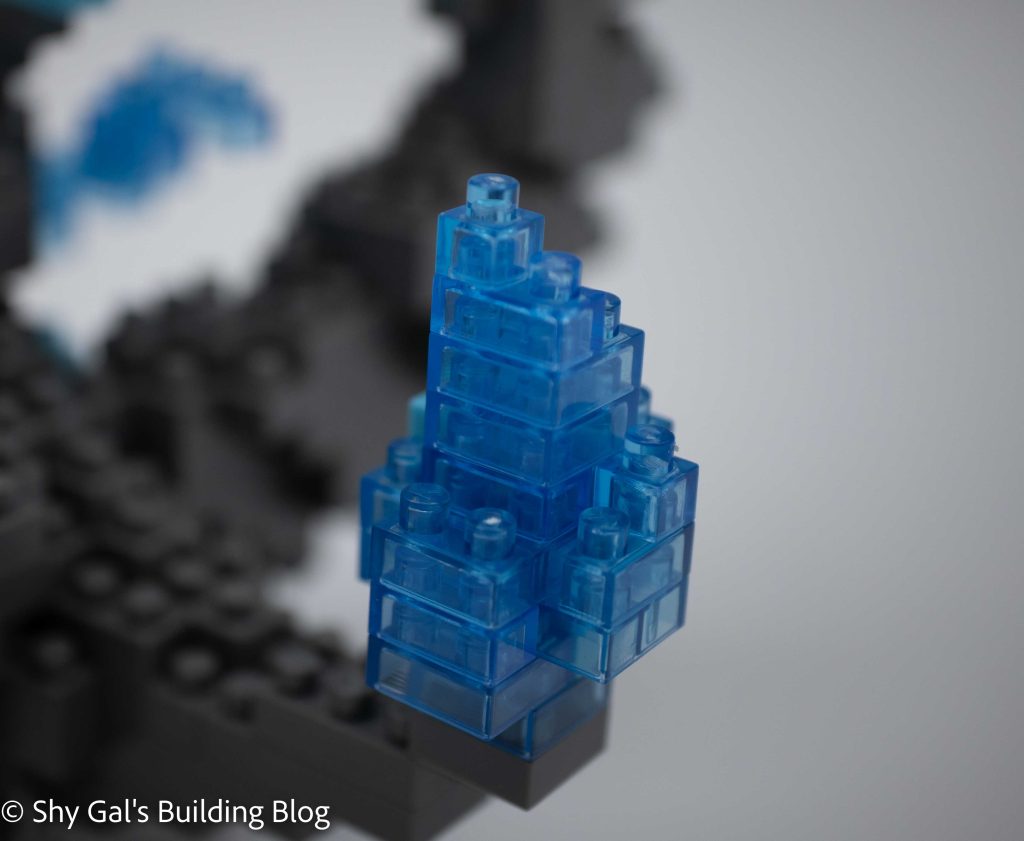
Then you build the tail flame using clear blue and pastel blue bricks. It was tricky to attach to the body because it’s a 2×2 brick going onto a single stud.

The final part of the build is the head. You begin with a base layer and build up in layers. As you build up the main section of the head, you will also add the flames coming out of the Charizard’s mouth. The flames are one of several brick chains on the head that you will build in the process of creating the head.

Mega Charizard X tail detail

Things I liked:

  • The use of multiple shades of blue

Things I didn’t like:

  • I’m not sure I needed another Charizard build I would rather have had a different Pokemon
Mega Charizard X back with tail detail

Review of nanoblock Mega Charizard Y NBPM_058

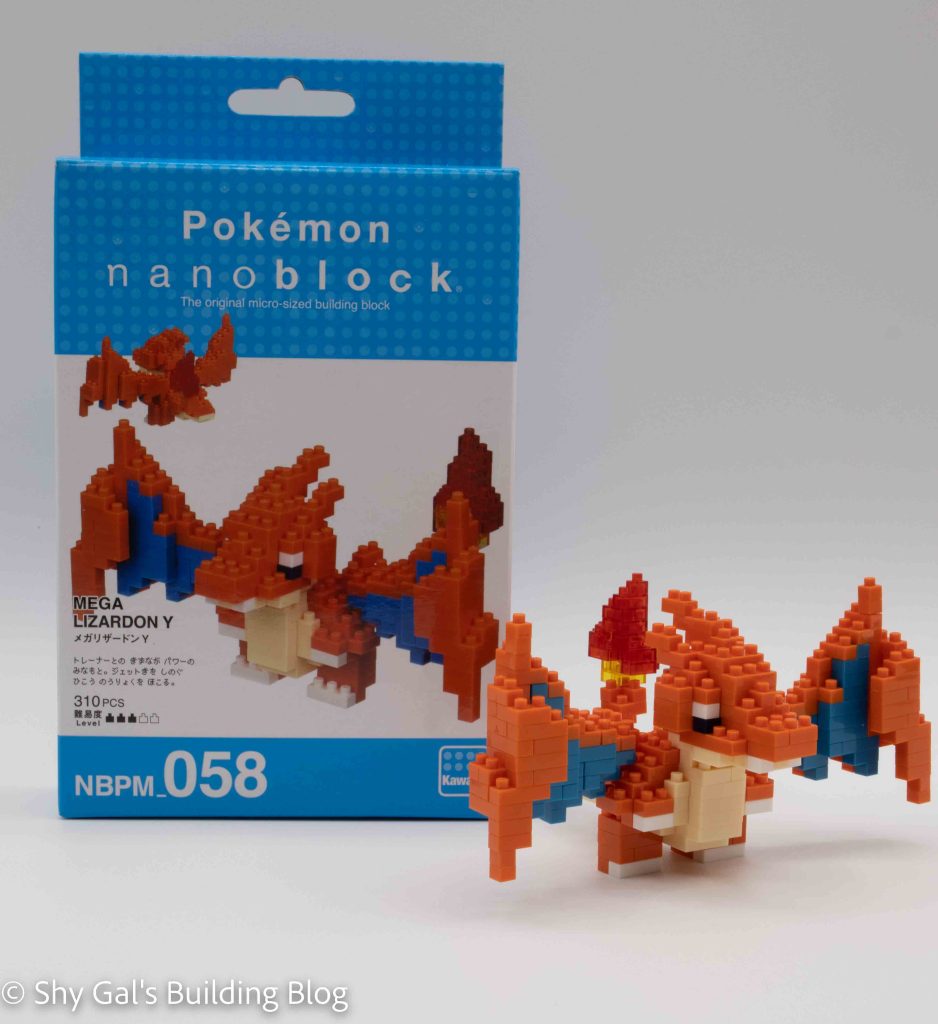
Mega Charizard Y build and box

This post is a review of the nanoblock Mega Charizard Y build. Mega Charizard Y is part of the nanoblock Pokemon collection. Wondering what else is part of the Pokemon Collection? Click Here for a list.

Names:

  • English: Mega Charizard Y
  • Japanese: Mega Lizardon Y

Number: NBPM_058

Number of Pieces: 310

Difficulty Rating: 3/5

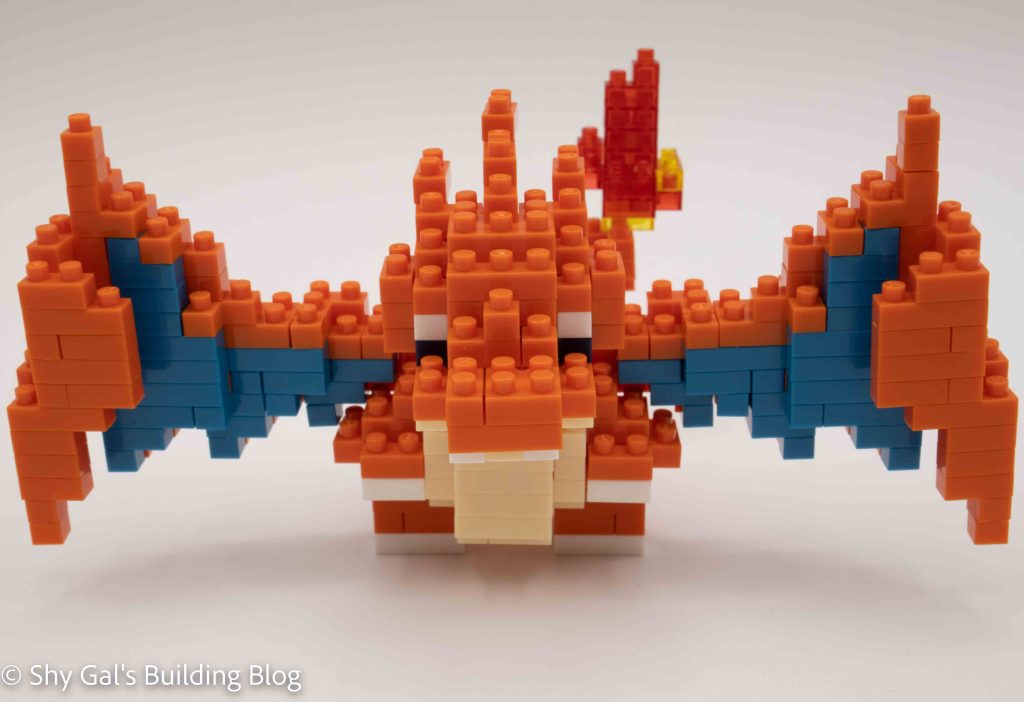
Mega Charizard Y front view

Mega Charizard Y was originally in Pokemon Y. Mega is used to describe Pokemon that have mega evolved, which was introduced in generation 6. Pokemon X has its own mega evolution named Mega Charizard X. Mega Charizard Y looks like a more powerful version of a regular Charizard.

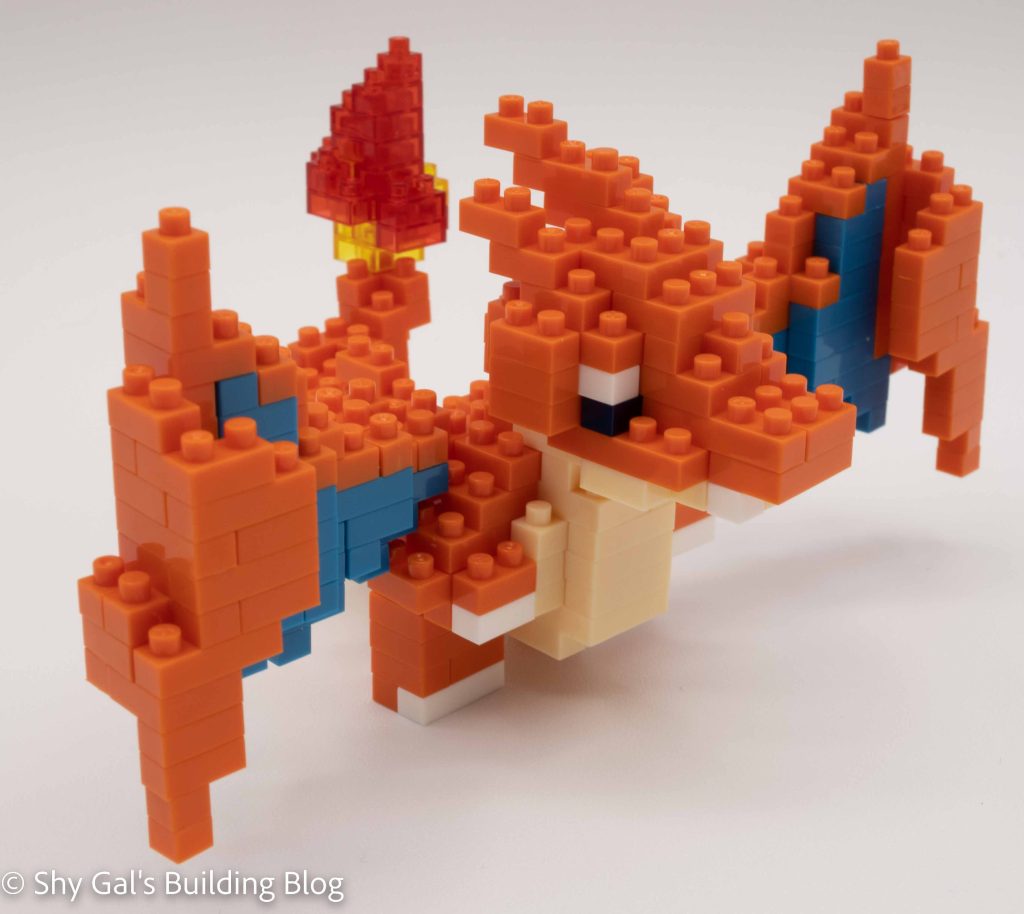
Mega Charizard Y front 3/4 view

Overall the build for Charizard Y is quite similar to regular Charizard. You first build your body which is the normal start with a base layer and build up. Next, you make the wings which are the most detailed part of the build. This is because of the layering of blue and orange so that you don’t see how the blue and orange are held together. Finally, you build a tail flame and a head with straightforward directions.

Mega Charizard Y back 3/4

Things I liked:

  • The use of clear blocks for the tail

Things I didn’t like:

  • I’m not sure I needed another Charizard build

Mega Charizard Y tail flame detail

Review of nanoblock Cyndaquil NBPM_029

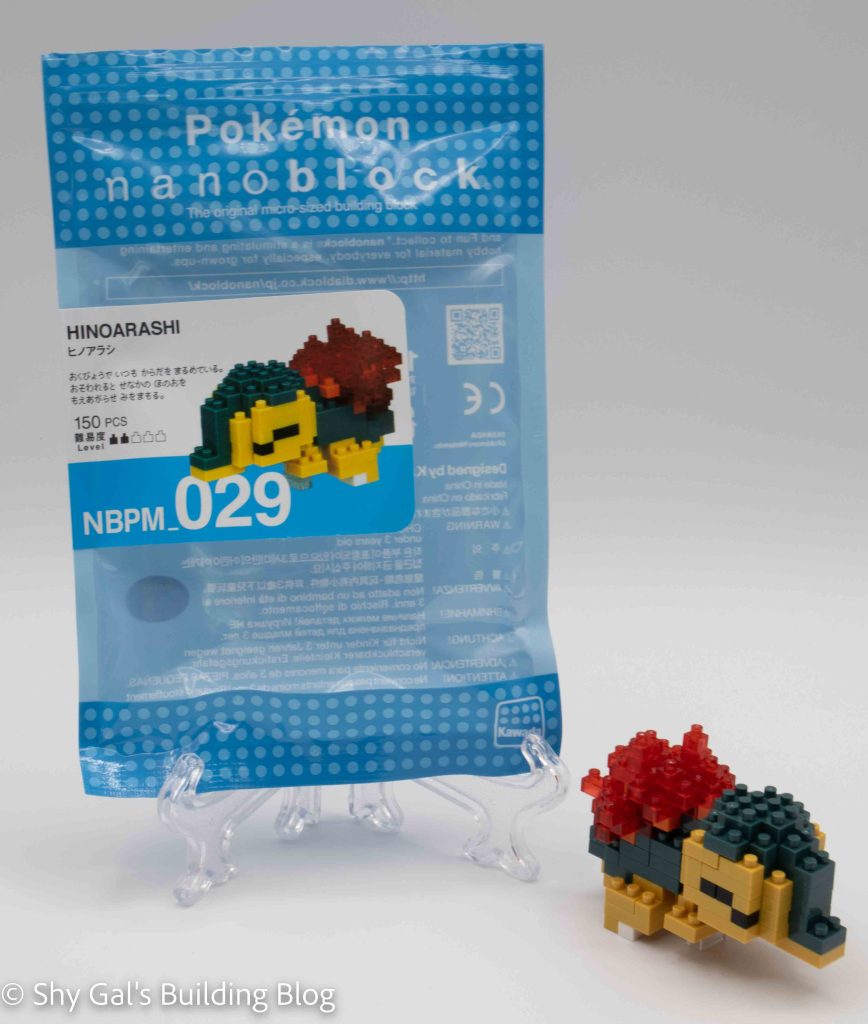
Cyndaquil build and pacakge

This post is a review of the nanoblock Cyndaquil build. Cyndaquil is part of the nanoblock Pokemon collection. Wondering what else is part of the Pokemon Collection? Click Here for a list.

Names:

  • English: Cyndaquil
  • Japanese: Hinoarashi

Number: NBPM_029

Number of Pieces: 150

Difficulty Rating: 2/5

Cyndaquil front view

Cyndaquil is the fire-type starter from generation 2. It is a starter along with Totodile and Chikorita. It is also one of the starters in the new Pokemon Legends: Arceus game. Cyndaquil is generally shown as a very shy Pokemon.

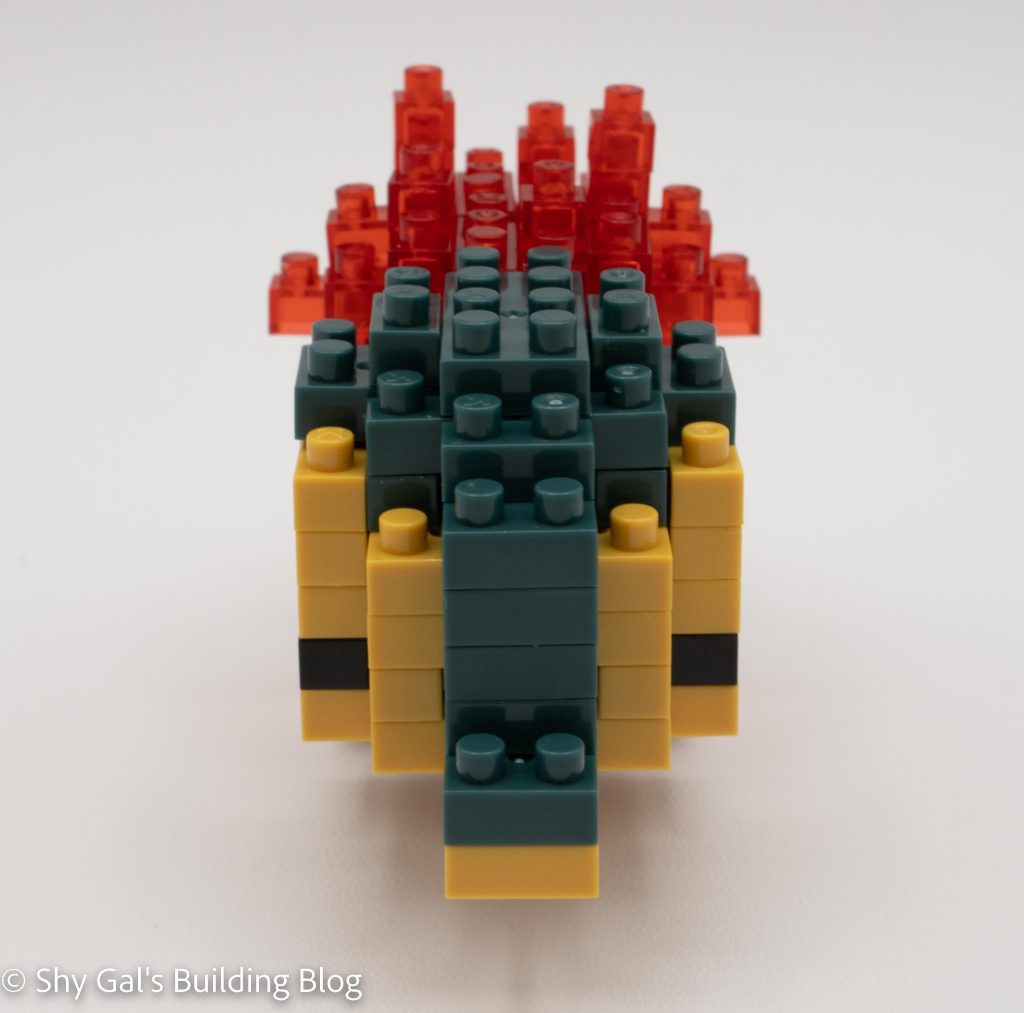
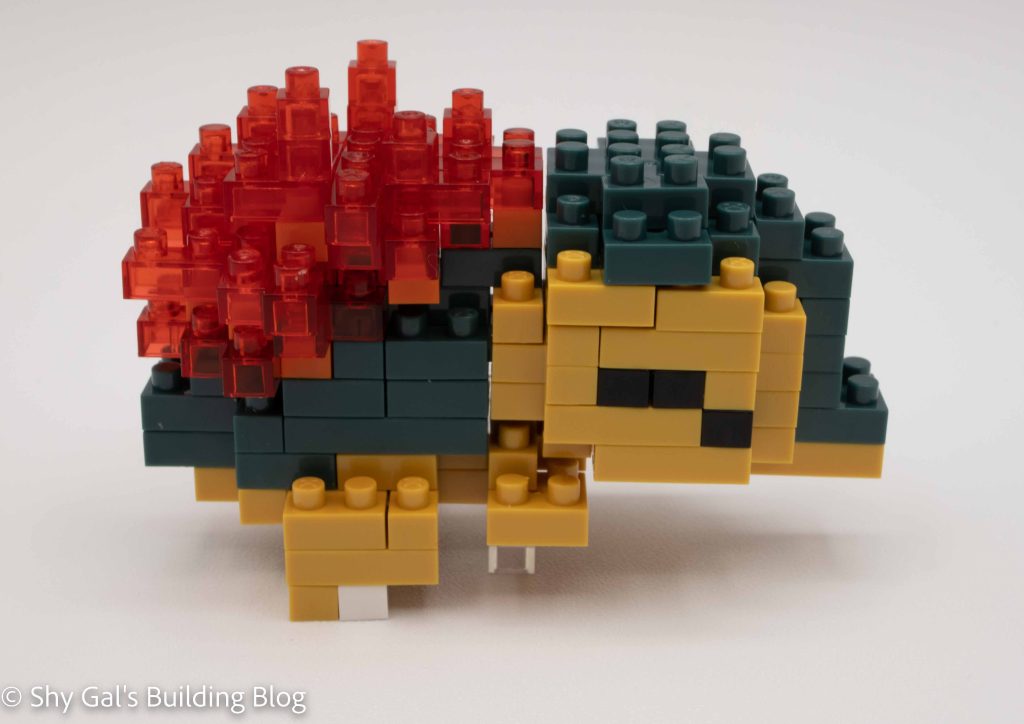
The build begins with a base of bricks. In the second layer, you start to add the dark on the back. You continue to build layers of bricks, and eventually, you begin the flame on the back. The next step is to start building the head. You build the head up from a base in layers circling and creating rings for the head.

Cyndaquil side view

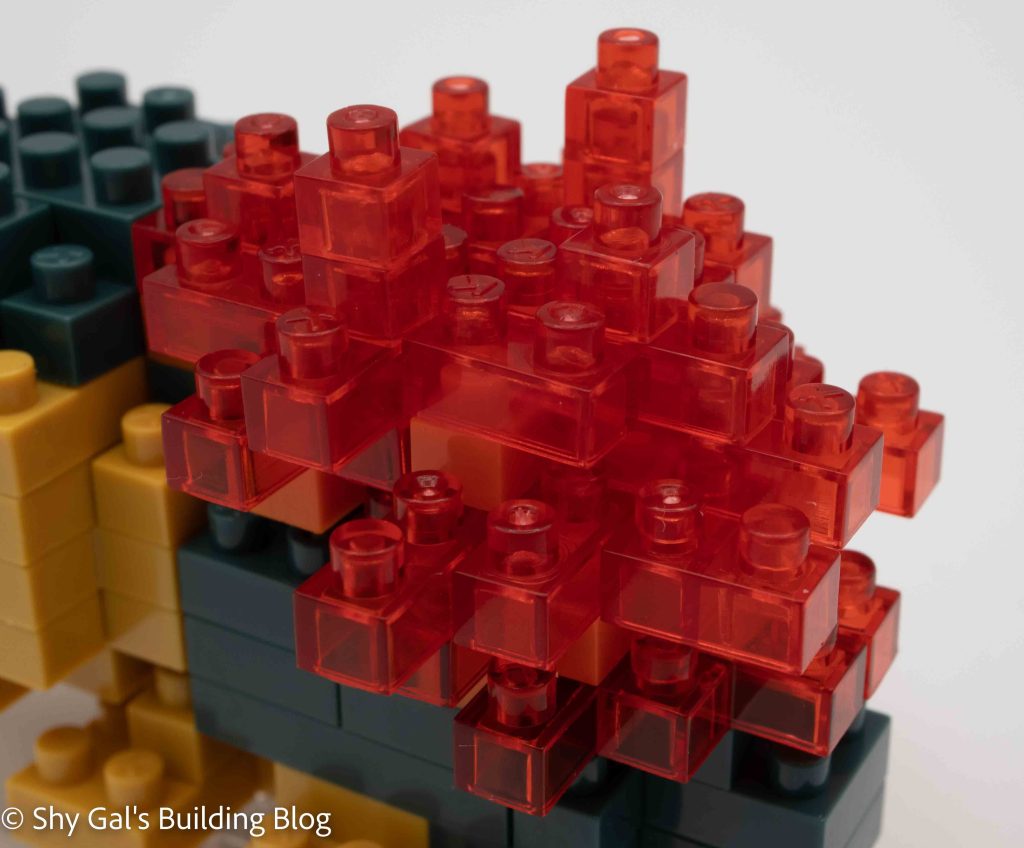
Once you have the started head, attach it to the body you built earlier. Next, you close up the head and make the flame on the back. Once you have completed closing up the head, you add more details to the flame. The final step is to add the details of the feet and the clear bricks that keep the build from tipping.

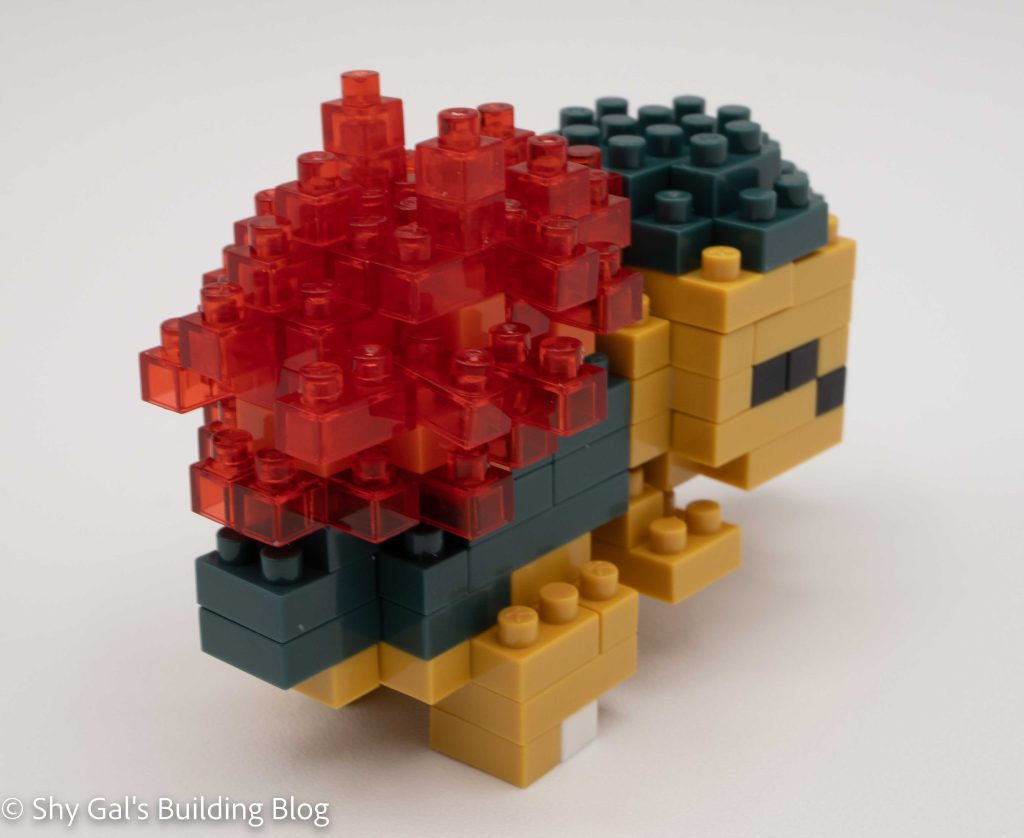
Cyndaquil fire detail

Overall I think this is a super cute build. Cyndaquil has always been one of my favorites, so I was worried about how the figure would turn out. I like the amount of detail in the flame between the orange and clear red bricks. I wish they had used a lighter color for the light part of his body. It seems really dark compared to the photo.

Cyndaquil back 3/4 view

Things I liked:

  • The amount of detail in the flame

Things I didn’t like:

  • The light section of the body is too dark

Review of nanoblock Totodile NBPM_031

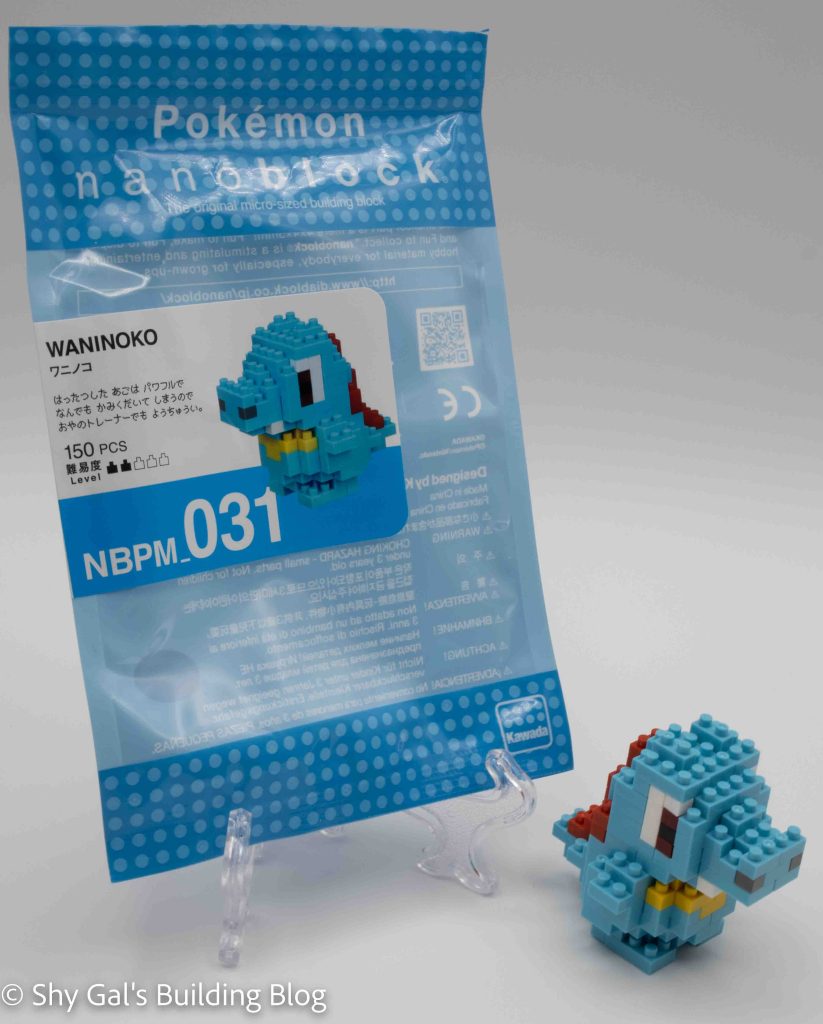
Totodile build and package

This post is a review of the nanoblock Totodile build. Totodile is part of the nanoblock Pokemon collection. Wondering what else is part of the Pokemon Collection? Click Here for a list.

Names:

  • English: Totodile
  • Japanese: Waninoko

Number: NBPM_031

Number of Pieces: 150

Difficulty Rating: 2/5

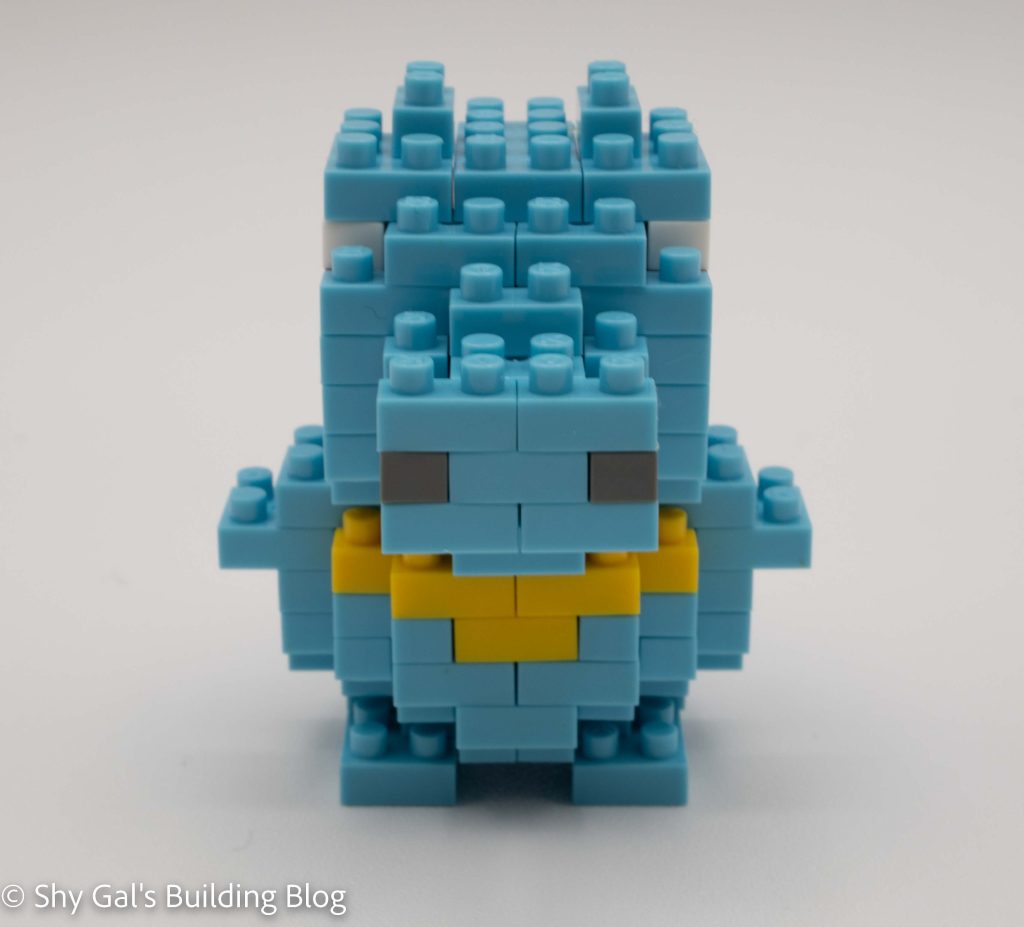
Totodile front view

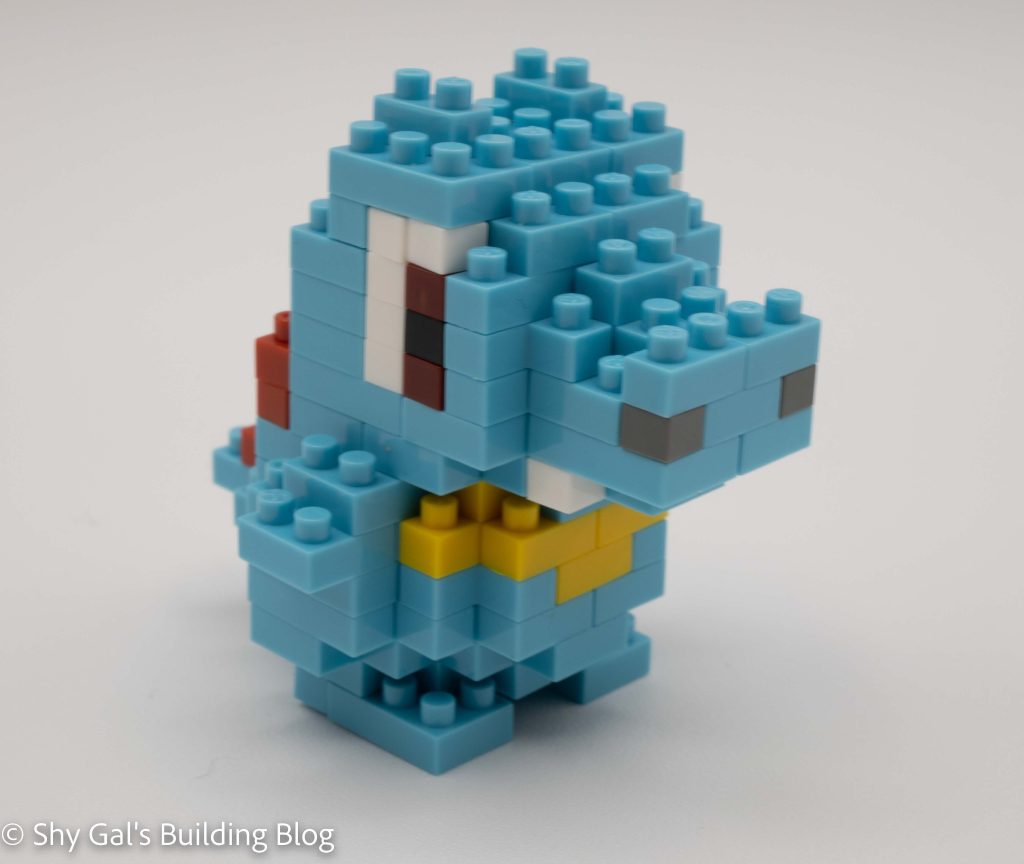
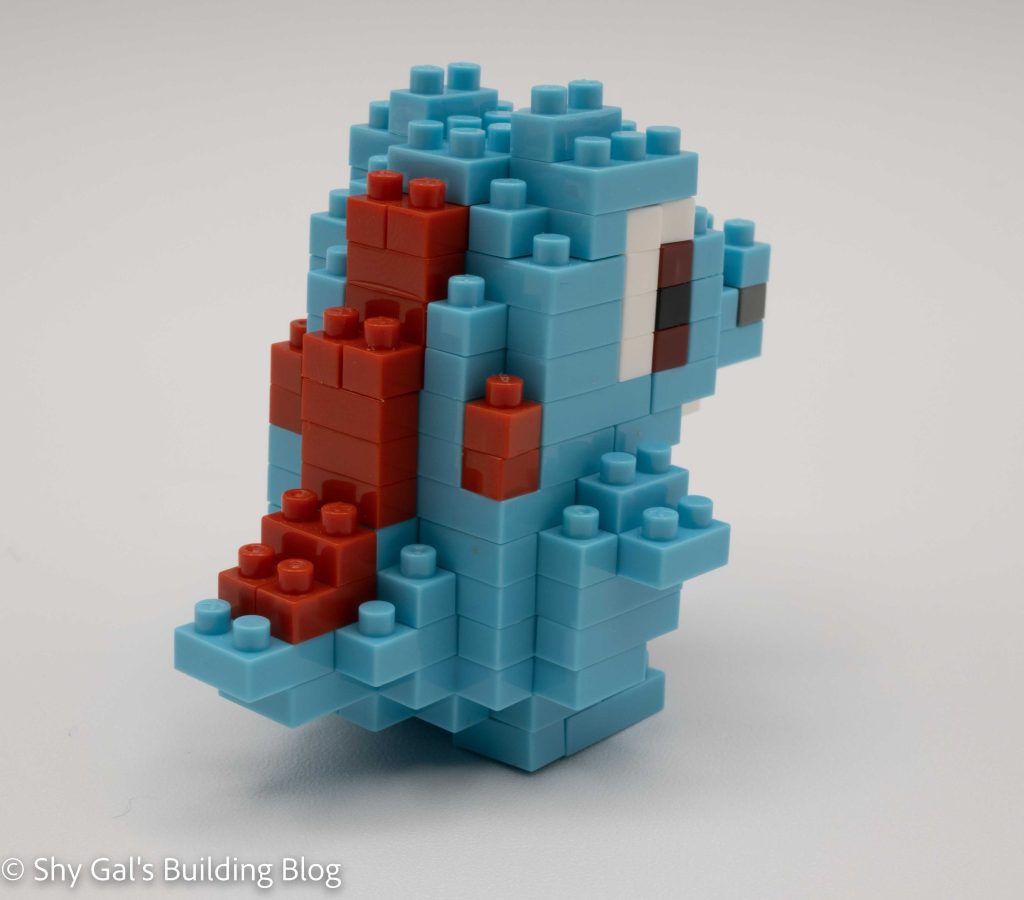
Totodile is the water starter from generation 2. It is light blue with orange spikes going down his back.

Overall the build is an average build from a solid base. There are a lot of areas with different colors, such as dark red for the eyes and dark grey to make his nostrils. The most challenging part I had was getting the fangs to correctly line up because it is just a 1×1 brick hanging off a 2×3 brick.

Totodile front 3/4 view

Totodile is very recognizable as the little water dragon he is. He does have an excellent line of red going down his back which helps to make it clear which Pokemon you are looking at. I notice his eyes seem to be huge compared to the rest of the Pokemon.

Totodile back 3/4 view

Things I liked:

  • How the spikes ended up looking

Things I didn’t like:

  • Eyes seem super large compared to the rest of the nanoblock pokemon

Link to order: Amazon